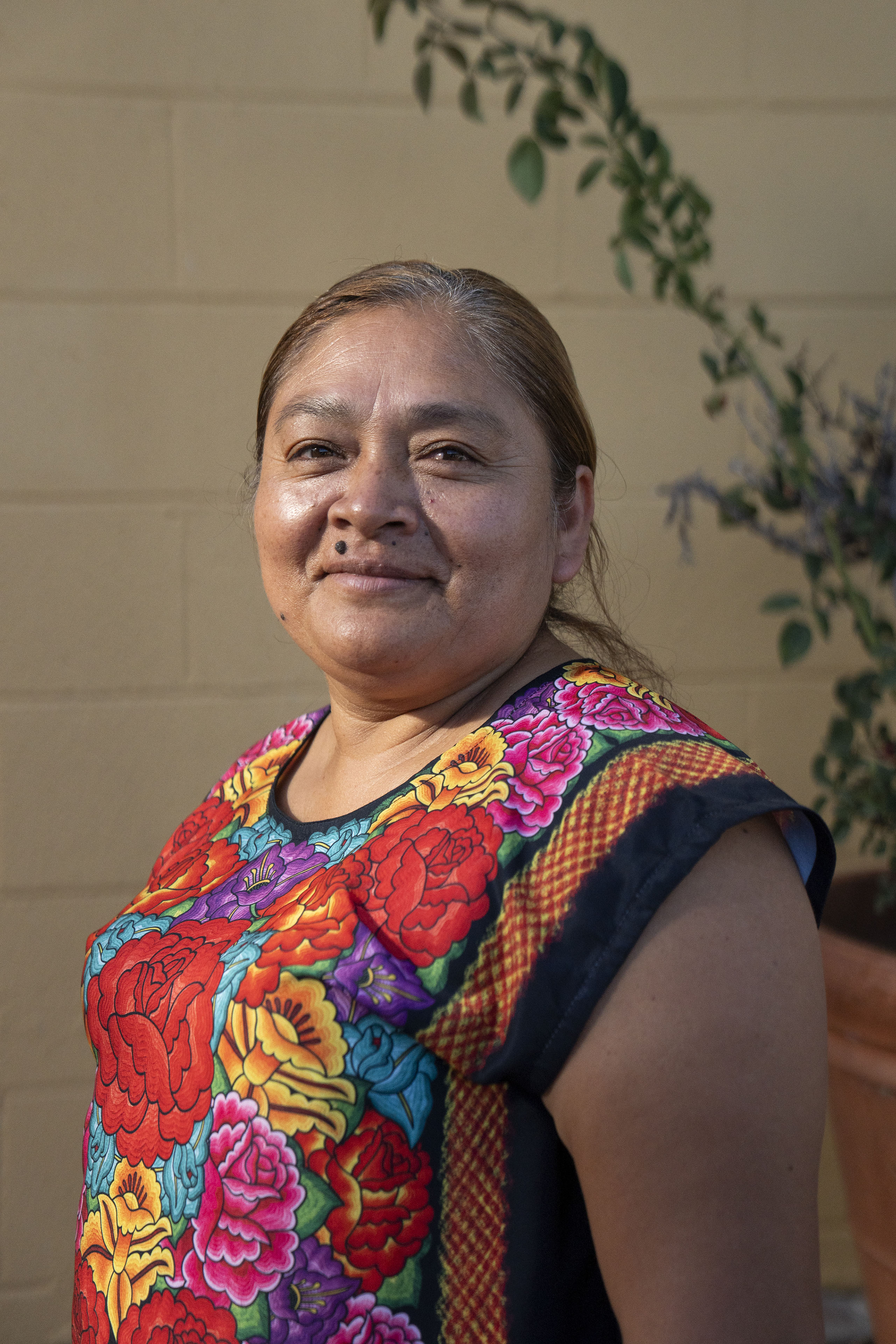
Ed Westrick, a Republican in rural Texas, rates President Donald Trump’s job performance as “mediocre, middle-of-the-road.” About half of rural voters believe the economy is worse off now than when Trump returned to office, according to a new KFF-AP survey. (LM Otero/AP)
About half of rural American voters believe the economy is worse off now than when President Donald Trump returned to office, according to a new survey that points to economic frustration among a key group that has backed Trump and other Republicans in recent elections.
The poll of more than 2,000 rural registered voters by The Associated Press in partnership with KFF found broadly negative views on the national and local economies, including from many Republicans. The costs of groceries, gas, and healthcare rank as top pain points for the rural voters, who were surveyed over two weeks starting in mid-August. And a larger share than among voters overall say they are worried about being able to afford groceries or gas.
At the same time, about half of rural voters approve of Trump’s job performance, more than among U.S. adults overall in separate AP-NORC polling.
The findings suggest that many rural voters haven’t turned on Trump but that they also largely don’t think he has delivered the economic renaissance he promised on the campaign trail.
Ed Westrick, a registered Republican and veteran, rates Trump’s job performance as “mediocre, middle-of-the-road.” Westrick, who lives in rural Texas, isn’t sure he will cast a midterm ballot, a troubling sign for Republicans in a key state in their fight to keep control of Congress.
Rural Americans skew Republican and historically have been an instrumental group of voters for Trump. The survey reveals that while rural voters seem unlikely to support Democrats on a large scale, Trump and the Republican Party could face challenges with them in November.
Deep Unhappiness About the Economy
As the election approaches, only about 4 in 10 rural voters approve of Trump’s performance on the economy. They rate him similarly on his handling of the Iran war, an entanglement that has proved expensive for the U.S. and increased oil and gas prices. And rural voters rank pocketbook concerns and fraud in government programs higher among the things they want to hear about from politicians than other perennial issues, such as gun policy and abortion.
Westrick, 59, is a technical trainer in the electronics industry and has seen an increase in business in part because he works with defense contractors, but he said he’s concerned about the cost of living.
“I hear the politicians talk about making groceries more affordable and making healthcare more affordable but yet none of them are addressing the issues,” Westrick said.
Westrick adjusts a roof on a small building at his home in rural Texas. (LM Otero/AP)
In the poll, about three-quarters of rural voters rated the cost of living in their communities as “only fair” or “poor” — up from about half in a KFF-Washington Post survey in 2017. Rural Americans, who have consistently lower wages than those who live in suburban and metro areas, have been hurting economically for decades, according to Tim Slack, a professor of sociology at Louisiana State University and co-author of the book Rural and Small-Town America.
“Many folks are connecting the cost-of-living crisis to many of the Trump administration’s policy choices: the war in Iran, tariffs, trade wars,” Slack said. “None of those things are going to bring down prices at the pump or the local Walmart.”
“Trump promised to lower prices on Day 1, and instead the cost of living’s continued to climb. And that’s especially painful in rural America,” Slack said, adding that he expects many working-class Republicans to skip voting in November.
Rural Republicans do have a brighter economic perspective than rural Democrats or independents, particularly about the U.S. as a whole, according to the survey. About 6 in 10 rural Republican voters say Trump has improved the national economy, compared with only about 2 in 10 independents and fewer than 1 in 10 Democrats.
But only 45% of rural Republican voters say Trump has made their local economies better off. About 1 in 4 said there are fewer good-paying jobs where they live than five years ago.
In Michigan, 37-year-old independent voter Brittainy Sosebee said she isn’t sure if she will vote in the state’s midterm election, which includes a tight Senate race seen as crucial to the Democratic Party’s push to win back a majority. Sosebee voted for Trump in 2016 and Democratic candidate Joe Biden in 2020; she didn’t vote in 2024.
Sosebee, who lives in St. Johns, a small town just north of Lansing, said she used to have extra money to take a vacation or buy a new pair of jeans without worrying. Now, she scrutinizes every expense, cringing at the rising cost of fresh produce when she shops for her three children.
“We hunt, so we have a lot of venison and things like that, so we don’t have to buy meat from the grocery store, but it’s still crippling,” she said.
Email Sign-Up
Subscribe to KFF Health News' free weekly newsletter, "The Week in Brief."
Healthcare Policies Go Unnoticed
The KFF-AP poll found that rural voters overall don’t perceive much positive impact from the Trump administration’s healthcare policies even as they have been a top priority for Republican leaders, who have promoted efforts to lower drug costs and touted a $50 billion rural health program.
Only 17% of the voters said the Trump administration’s healthcare policies have had a “positive impact” on their healthcare costs, while 41% said they’ve had “no impact” and another 41% said they’ve had a “negative impact.”
Sitting on her front porch in Woolwich, Maine, 71-year-old Democrat Kathleen Hanning sipped a chai tea latte in the sun and recalled how she stopped voting for Republican Sen. Susan Collins in 2020.
Collins and Trump are “intertwined,” Hanning said. “She is not independently voting on what’s best for Maine.”
Hanning, a retired federal worker, said she hadn’t paid much attention to the health policies in Trump’s signature tax-break-and-spending-cut bill passed last year. The law reduces federal Medicaid spending by roughly $900 billion over a decade but also includes the billions of dollars for the Rural Health Transformation Program, which it created.
A year after the law’s passage, more than 8 in 10 rural voters said they’d heard either “a little” or “nothing at all” about the health fund. About 60% said they had heard nothing, according to the survey.
Rather than transforming, Hanning said, “hospitals up here in Maine are consolidating.” She travels an hour to see a specialist and noted that mothers will now have to drive farther for care because the hospital in nearby Damariscotta announced it would soon close its labor and delivery center.
Nine in 10 rural voters said it was “extremely” or “very” important for candidates to talk about healthcare costs, with more than half saying it’s “extremely important.” Mirroring the general population, rural voters ranked healthcare costs and gas prices as top economic worries.
Rural Republican Voters Still Trust GOP More
When asked which political party they trusted to do a better job handling issues such as the cost of healthcare or the cost of living, rural voters tended to side with their own party. The finding signals that Democratic candidates are more likely to benefit from rural Republicans’ staying home this November than from their voting across party lines in large numbers.
Republicans are more ambivalent about their party’s ability to handle key healthcare issues, compared with Democrats. About 8 in 10 Democratic voters say they trust the Democrats to address healthcare costs, while closer to 6 in 10 Republican voters say the same of the Republicans.
In Manassas, Georgia, a tiny town about an hour’s drive inland from Savannah, Republican voter Wanda Rogers feels the Trump administration is doing the best it can to clean up what she sees as an economic mess that Democrats left behind when they lost power.
“I kind of think people think like I do, that he knows what needs to be done,” she said. “It’s just taking them a while to get it there.”
Still, the 66-year-old said, “gas prices, they’re eating me alive right now.” She said she has stopped traveling to the beach because it has become too expensive.
Pamela Shaw, an independent voter who lives in a rural area near Asheville, North Carolina, said she sees the impact of rising costs in her community.
“When hamburger is over $7 a pound and steak is $15 or more a pound, a lot of people are not able to buy some of the things that they are used to buying,” the 59-year-old said in an interview.
Trump’s Rural Standing Has Slipped
Trump remains relatively popular among rural voters in the KFF-AP poll, with 48% approval — substantially higher than in a July AP-NORC poll of U.S. adults overall, in which only a third approved of his performance. But he’s also down slightly, from 56% approval, among rural voters, based on a similar question asked in the earlier KFF-Washington Post survey.
Asunta Washington, 38, is a truck driver who lives in South Texas. He said he is not against voting for Republican candidates if he wholeheartedly agrees with what they stand for, but he has not seen that. Instead, he has seen a lot of flip-flopping, he said.
“Like, a lot of people that are giving us promises and the moment they get elected, all that’s out the window,” Washington said.
Asunta Washington, a truck driver in New Braunfels, Texas, says he’d be open to voting for Republican candidates if their views aligned with his. (AP Photo/Eric Gay)
This year’s competitive elections feature key Senate races in states including Ohio, Michigan, and Maine, all of which have large rural populations. In close races, Democrats may have a chance to “show up and give a message that rural people might find appealing,” said Nicholas Jacobs, a political scientist at Colby College and co-author of the book The Rural Voter.
“But it’s nothing more and it’s nothing less than that — an opportunity,” Jacobs said. “And time and time again, Democrats have shown a certain proclivity for not seizing that opportunity.”
Many rural voters don’t think the major parties or the president respect people like them. About half, 48%, of rural voters say the GOP respects people like them “a lot” or “some,” while 45% of rural voters say this about Trump and 37% say this about the Democratic Party.
On a recent Thursday, registered Republican Nate Lawrence answered his phone after paying $57 to fill up his Chevy Equinox in New Concord, Ohio, a village of fewer than 3,000 people about an hour’s drive east of Columbus.
Lawrence, a middle school English teacher, said the candidates should be talking about spending power: “I need to be able to go to the store and feed my family on what I make as a teacher,” Lawrence said. “I should be able to pay for a house on a teacher’s salary.”
Lawrence has voted for Trump in the past but didn’t in 2024. For Ohio’s Senate race, Lawrence said he is torn and not sure whether to pick Democrat Sherrod Brown or Republican Jon Husted.
Still, even if the politicians say they will lower prices, Lawrence said, he won’t believe them.
“Trump said that, and it didn’t happen,” he said.
About the Poll
The KFF-AP Rural Voters Survey was conducted online and by telephone Aug. 12-24, 2026, among 2,241 registered voters living in rural areas, defined as census tracts that fall within codes 5-10 of the U.S. Department of Agriculture’s 2020 Rural-Urban Commuting Area (RUCA) codes. Voters were reached through a combination of the probability-based SSRS Opinion Panel and a registration-based sample from the L2 voter file. Overall results have a margin of sampling error of plus or minus 3 percentage points, including design effects due to weighting. Error margins are larger for subgroups. In collaboration with the AP, KFF researchers worked to design the survey sample and questionnaire and analyze and report findings.
This report is from a collaboration between KFF Health News and The Associated Press.
The San Vicente de Paúl Nursing Home in the South Bronx hasn’t admitted a patient since December 2024. ArchCare, which operates the facility, has reduced its capacity from 120 available beds to 53 and plans to shrink it further.
Another ArchCare nursing home, on Staten Island, has shut down a full floor. North of the city, in Dutchess County, its Ferncliff Nursing Home has contracted from 309 available beds to 196.
The eight nursing homes owned by ArchCare, a nonprofit that provides eldercare through the Archdiocese of New York, have 269 fewer usable beds than they did 18 months ago, a nearly 12% decline, creating waiting lists for patients seeking long-term care.
Across New York state, 24 nursing homes have closed since 2020, resulting in a loss of more than 3,000 licensed beds, according to LeadingAge New York, which represents nonprofit senior living organizations.
That mirrors a national trend. In 2015, the Centers for Medicare & Medicaid Services certified 15,648 nursing facilities. A decade later, that number had fallen by more than 900.
With the oldest baby boomers turning 80 this year, an age when the need for long-term care climbs sharply, researchers are sounding alarms. Will there be enough nursing home beds for a rapidly graying nation?
“We’re seeing a serious problem and it’s heading in the wrong direction,” said David Grabowski, a health policy researcher at Harvard Medical School. He is an author of a study in JAMA Internal Medicine that found a 5% decrease in national nursing home capacity from 2019 to 2024. “As you look at the demographics, this is only going to get worse, maybe a lot worse,” he said, especially given looming Trump administration policies on immigration and Medicaid financing.
The reasons for the shrinkage?
ArchCare blames inadequate state reimbursement for Medicaid, a perennial industry complaint. The primary payer for nursing home care, Medicaid provides less than the daily cost of care, said Clif Porter, chief executive of the American Health Care Association, an industry trade group.
“Before the pandemic and inflation, the losses were sustainable,” said Jason Hutchens, ArchCare’s chief operating officer. More recently, he said, “we were running at an unsustainable loss — we had no choice.”
Email Sign-Up
Subscribe to KFF Health News' free Morning Briefing.
Nursing homes, most of them for-profit, try to compensate by attracting short-stay patients covered by Medicare, which pays higher rates than Medicaid. When they can’t, “unless you’re extremely rapacious or extremely efficient, you’re not going to make it,” said Vincent Mor, a health services researcher at the Brown University School of Public Health who is an author of an article, published in the New England Journal of Medicine, raising concerns about reduced capacity. “The numbers don’t add up.”
Staff shortages, which have plagued nursing homes for decades, have also caused contractions and closures. Nursing home aides work stressful, low-paying jobs with historically high turnover rates. Their median hourly wage last year was $20.67, according to federal data compiled by PHI, a research and advocacy group for direct care workers. Although pay has risen over the past decade, about 40% of nursing home aides rely on some form of public assistance, such as Medicaid or the Supplemental Nutrition Assistance Program, PHI reported.
The number of nursing home aides has rebounded from the covid pandemic, according to PHI, but fewer are working than in 2015. And while hiring and retention have improved, Porter said, “there’s still a significant gap between demand, especially future demand, and where the workforce currently is.”
National occupancy rates, which fell sharply during the pandemic, have returned to a more typical 80%.
That figure can be misleading; it doesn’t mean 1 bed in 5 sit empty, awaiting a patient. Occupancy counts state-licensed beds, but the more meaningful number is operating beds — how many are actually available depending on a facility’s staffing and other factors.
That number is usually lower and, in many cases, sinking. The American Health Care Association reported in 2024 that almost half of nursing homes were limiting admissions and 57% had waiting lists for new residents.
It’s possible, of course, that they also face financial losses because of lower demand. “Nursing homes close because people don’t want to go to nursing homes,” said Sam Brooks, director of public policy for the National Consumer Voice for Quality Long-Term Care, an advocacy group. “The quality is so low that people avoid them like the plague.”
Last year, Medicare inspectors found at least one quality violation serious enough to harm or jeopardize residents in 27% of nursing homes, according to an analysis by KFF, a health information nonprofit.
In recent decades alternatives emerged that diverted patients from nursing homes. About a million older adults currently live in assisted living facilities. And among Medicaid recipients, the ongoing policy shift called “rebalancing” has enabled more people to receive services at home (where most want to be) rather than in nursing homes.
In 1988, only 10% of Medicaid expenditures for long-term services went to home- or community-based services; the rest paid for institutional care. By 2020, more than 60% of expenditures funded home and community care, said Priya Chidambaram, a KFF senior policy manager specializing in Medicaid, citing a staff analysis.
How big a problem these trends pose depends partly on geography. The decline in the number of nursing homes in rural locations — about 10% from 2015 to 2025 — was much greater than the national drop of about 6%.
“It’s more difficult to staff a rural nursing home,” Chidambaram said. “Labor pools are smaller, and it’s hard to get people to take lower-paid or part-time jobs if they have to travel long distances.”
Bed shortages are also creating bottlenecks at hospitals. Where nursing home capacity declined, Grabowski’s team found, patients stayed in hospitals longer because they couldn’t locate posthospital care. They often had to travel farther to find facilities. “It gums up the entire system,” Grabowski said.
On two fronts, Trump administration policies could make matters worse, experts said. Revoking legal status for certain immigrant groups has worsened staffing shortages.
So far, “we’re not seeing significant impact across the country,” Porter said. But the effects are being felt in specific locations, including Florida, New York, and Massachusetts, he confirmed. With further revocations and deportations, “a lot fewer older adults are going to have caregivers,” Grabowski said.
The administration’s more than $900 billion in cuts to Medicaid over a decade are also expected to exact a toll. As states grapple with reduced funding, analysts expect home and community services to take a greater initial hit than institutional care. But that could increase pressure on nursing homes if patients who lose home care turn to institutions instead.
Less of these services “means more nursing home entry,” Grabowski said.
As policy ideas circulate — with calls for better data tracking, special visas for immigrant health workers, and targeted grants for nursing homes serving high-cost populations — researchers, advocates, and families are waiting to see what unfolds.
“So much of this is speculative,” Chidambaram said. “We don’t know what states will decide. We don’t know how the market will react. We’re in new territory here.”
The New Old Age is produced through a partnership with The New York Times.
Insurance Coverage Lags as Cancer Science, Treatment Move Forward
Insurance Coverage Lags as Cancer Science, Treatment Move Forward
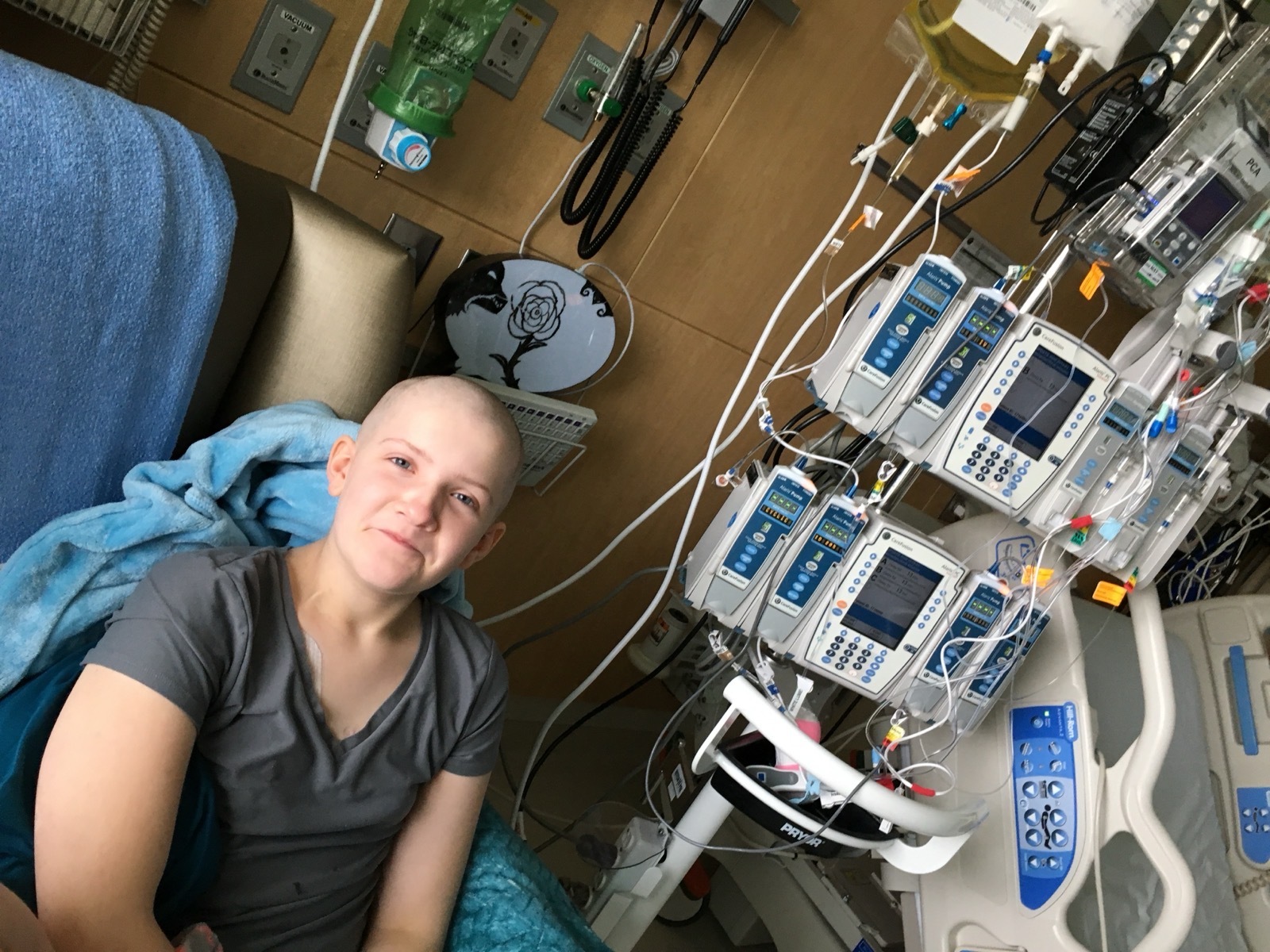
Mason Henderson with his mother, Tabitha Lowe, in November during a visit to New York, where Henderson was participating in a clinical trial to treat his brain cancer. Henderson died in May after a two-year battle with the disease. (Jerry Lowe)
Eighteen months after his initial diagnosis, chemotherapy hadn’t slowed 21-year-old Mason Henderson’s rare brain tumor, which had spread to his spinal fluid. So he left his home in southeastern Texas to spend three weeks in a clinical trial in New York City.
But that failed, too, leaving a murky path for Henderson, whose cancer was so rare the World Health Organization had only given it a name in 2021. So early this year, Henderson’s doctors, evaluating his tumor’s deep genetic language, turned to a drug made by Merck and AstraZeneca called Lynparza.
It was not the standard of care for Henderson’s condition — there wasn’t really any standard, which is not unusual for rare cancers. And Henderson’s insurance would not pay for it, despite the careful justification given by the two specialists treating him.
“They have no guidelines for his cancer,” Henderson’s mother, Tabitha Lowe, said in a March interview with KFF Health News. “They’re discriminating against him because his cancer is so rare.”
Tabitha Lowe and her son Mason Henderson. Lowe spent six weeks trying to get an $8,700-a-month drug for her son that the family’s pharmacy benefit manager wouldn’t cover. (Tabitha Lowe)
Every year, tens of thousands of people — representing about a quarter of all U.S. cancers — are diagnosed with tumors that differ enough from frequently identified ones to be called rare. In determining whether to reimburse treatment for such ailments, insurers turn to Food and Drug Administration labels and expert guidelines.
But these rare afflictions often lack targeted, FDA-approved treatment options, even though in many cases, molecular tests offered by diagnostic companies and university labs can provide a strong suggestion of what will work.
“Insurance coverage routinely trails behind what genomic testing reveals about a patient’s cancer and what the science supports,” said Olivier Elemento, director of Weill Cornell Medicine’s Englander Institute for Precision Medicine.
Henderson’s neuro-oncologists, Jacob Mandel of the Baylor College of Medicine and Jessica Schulte of NYU Langone Health, decided to try Lynparza, also known by the generic name olaparib, in combination with chemotherapy. There wasn’t a wealth of evidence behind the drug but there was a “biologically reasonable” assumption it would help, Schulte said, because cells in tumors like Henderson’s have a flaw that drugs like Lynparza can target. Providers in several previous cases had seen brain cancers like Henderson’s respond well to the drug.
“In general, we try to base our treatment decisions on large patient studies” involving hundreds of patients, Schulte said. But large clinical trials will probably never be conducted for a cancer as rare as Henderson’s.
Schulte, who specializes in brain cancers in young adults, sees only a few of Henderson’s type each year, she said.
Mandel prescribed the drug on Jan. 16. Liviniti, Henderson’s pharmacy benefit manager, responded with a quick refusal on Jan. 30. Two weeks later, the company sent an explanation: “Lynparza is not approved for the diagnosis provided.” Out-of-pocket, the drug would cost about $8,700 per month, Lowe said. Liviniti did not respond to phone calls seeking comment.
Before his diagnosis, Henderson was a healthy, athletic young man with a big heart, faith in Jesus, and a tight group of friends, his mother said. At Evadale High School, north of Beaumont, Texas, Henderson played baseball and football and was homecoming king in 2022. After graduating, he worked at the local paper mill, spending his free time hunting, fishing, and exploring the woods on an all-terrain vehicle. He wanted to be a police officer, Lowe said.
Henderson was 20 on March 15, 2024, when his brother Gunner found him at the top of the stairs in the family home with his head in his hands. “He was in the post-seizure state,” Lowe said. “He couldn’t talk. Was crying. Trying to hug me. Could not communicate.”
At an emergency room in Beaumont, an MRI revealed a large tumor. He was transferred to Baylor St. Luke’s Medical Center in Houston and diagnosed with a form of brain cancer called diffuse hemispheric glioma (H3-G34 mutant).
Surgery a few days later cut out 90% of the tumor, but brain cancers are almost impossible to remove entirely, because of the delicacy of the tissue they’re embedded in, Schulte said.
After 16 months of radiation and chemotherapy, a September 2025 scan showed the cancer had spread to his spinal cord, a condition called leptomeningeal disease that usually proves fatal within a few months. Mandel contacted Schulte about a clinical trial she was leading. It consisted of 11 days of brutal craniospinal irradiation, which left Henderson exhausted. When it was over, the cancer was still there.
“The family was wonderful,” Schulte recalled. “They were trusting in their team, but they asked appropriate questions to make sure that we were thinking about Mason as a person.”
Email Sign-Up
Subscribe to KFF Health News' free Morning Briefing.
Coverage Refused
Lynparza, approved by the FDA in 2014 for ovarian cancer, works by interfering with tumor cells’ ability to multiply. After Liviniti, the pharmacy benefit manager, refused coverage for Henderson, his family turned to Jefferson County. Henderson’s stepfather, Jerry Lowe, flies helicopters for the county sheriff’s office.
The county, which had the final say on reimbursement because it pays claims directly for its employees’ family health coverage, also refused. When Henderson’s family appealed, the county review board authorized an independent medical reviewer to look at the case. The nonspecialist supported the board’s finding and recommended another drug, but Henderson’s doctors disagreed. The board didn’t respond to a request for comment.
AstraZeneca had also turned down the family’s request for a donation of the drug. By then it was March, six weeks after Lynparza was prescribed.
Cancers that start in the brain are unusual — only about 25,000 cases are diagnosed in the U.S. each year, compared with 320,000 breast cancers and 229,000 lung cancers. Only a few hundred people each year, mostly young adults, are diagnosed with Henderson’s type, according to Schulte.
Treatment options for diffuse hemispheric glioma are few; brain cancers in general are often excluded from clinical trials. They represent a relatively small market for a pharmaceutical company. Testing drugs against them is risky, because of the brain’s sensitivity, and difficult because the drug must pass through the tightly packed cell walls lining the blood vessels, known as the blood-brain barrier.
Patients like Henderson often struggle to get medications that are prescribed off-label based on recent scientific findings. (Tabitha Lowe)
Still, drugmakers are increasingly homing in on narrower and potentially more accurate drug targets as science reveals more of cancer’s remarkable molecular diversity.
Under guidance issued in 2022, the FDA has approved nine drugs to be used for patients whose tumors have specific mutations, regardless of the organ where the cancer first appeared. These “tissue agnostic” drugs are still a tiny minority, but as genome sequencing becomes more common — growing numbers of oncologists order it for patients — insurers will have to keep up, Weill Cornell’s Elemento said.
Several U.S. research groups are hosting clinical experiments known as “basket trials,” in which mostly late-stage cancer patients are put on drug combinations based on tumor genetics, rather than the organ of origin.
The American Society of Clinical Oncology has recruited more than 3,000 patients into one of the biggest efforts, the Targeting Agent and Profiling Utilization Registry, or TAPUR, which began in 2016. It provides off-label treatments at no cost to advanced-staged cancer patients at more than 270 U.S. oncology practices.
About half the participants have benefited, and in rare cases the treatment kept patients alive for a year or more or seemingly cured them, said Richard Schilsky, the program’s founder and its principal investigator until recently. The results have led to changes in several treatment guidelines, he said, and a change in guidelines “usually is sufficient to create a pathway to reimbursement by insurance.”
Research has uncovered “quite a few” cases in which Lynparza was effective against a variety of tumor types, Schilsky said. But like many clinical trials, TAPUR excludes patients with primary brain tumors — like Henderson’s.
Oncologists disagree on how broadly genetics discoveries will transform cancer diagnosis. Cancers are currently identified as breast, colon, lung, etc., because those are the cells that pathologists see when diagnosing a tumor, said Razelle Kurzrock, the associate director of clinical research at the Medical College of Wisconsin Cancer Center.
But that’s a “mistake of history,” she said. “You’re making the diagnosis based on the pathologist’s view of the surface of the cell rather than what’s actually driving the cancer.”
A Dutch father and son invented the first light microscope to peer at cells around 1590. The Human Genome Project finished in 2003. If genome-enabled next-generation sequencing, now used for molecular tumor scans, had come before the light microscope, “no one would look at organ of origin,” she said.
Kurzrock leads I-PREDICT, a clinical trial in which every patient gets individualized cancer therapy based on DNA, RNA, and protein patterns in their tumor. Instead of getting drug combination A or B, “in our trial everyone gets a different set of drugs,” she said. Physicians can instead use standard therapies, she said, and their patients are the study controls.
Other oncologists see limitations to purely genetic diagnosis. Certain cancer centers advertise by saying, “‘We’ll sequence your tumor better than anyone else, and therefore you’ll live longer and do better if you come here,’” said Kathy Miller, a professor of oncology at Indiana University. “But the evidence doesn’t support those claims right now.”
‘I Wouldn’t Give Up’
In Henderson’s case, the problem was never diagnosis; Baylor clinicians identified his cancer type quickly. But its rarity and location made the tumor hard to fight, and the lack of financial help made it even harder.
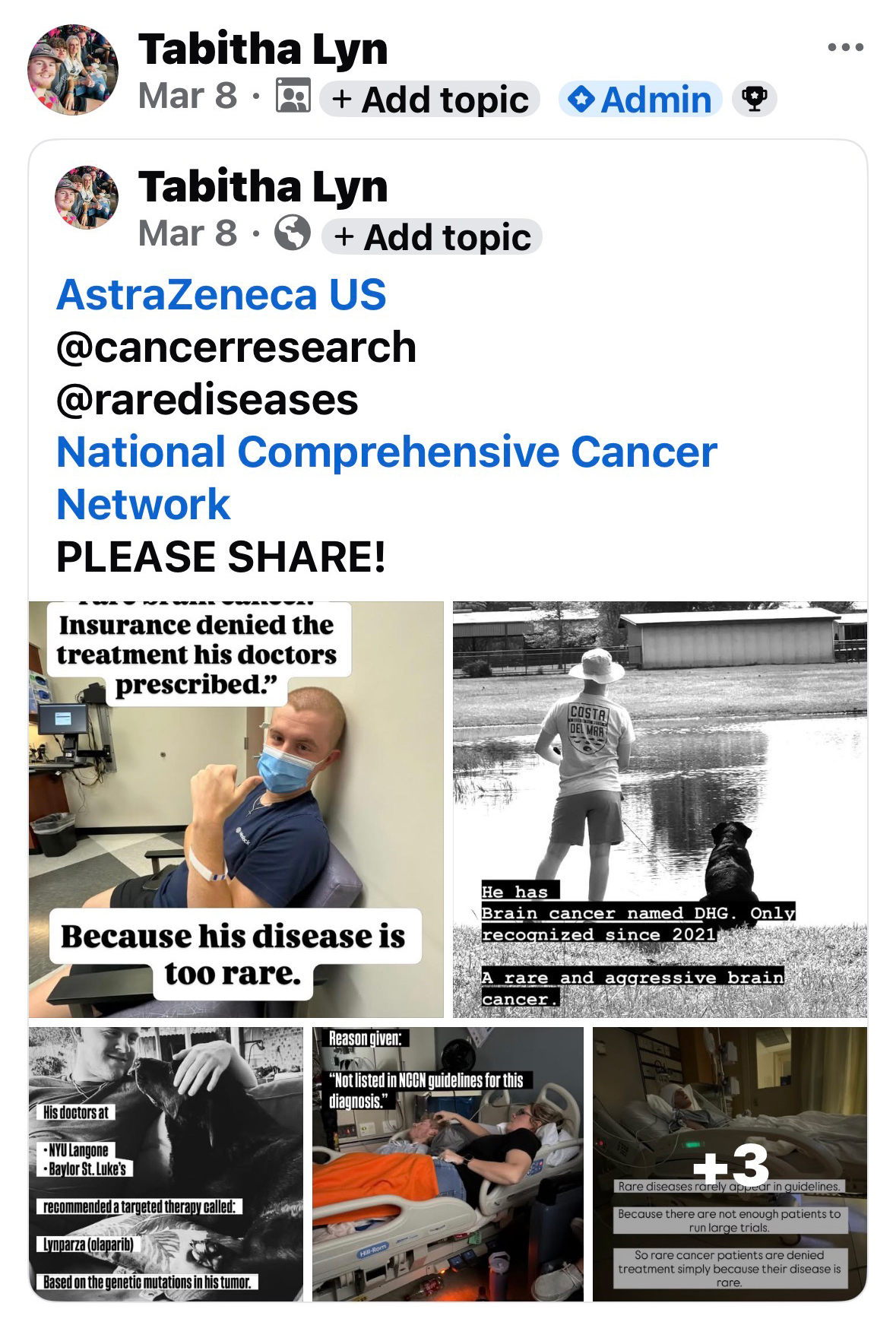
On March 8, Tabitha Lowe went on Facebook, LinkedIn, and Instagram with photos of her son and descriptions of his plight. She tagged AstraZeneca, Liviniti, and the county board that had denied his reimbursement. “Rare cancer patients are denied treatment simply because their cancers are rare,” she wrote in one of the posts, which were shared hundreds of times.
“I hated to take this route, but when it comes to my kids there’s nothing I won’t do,” she told KFF Health News. “I’ve cried, I’ve stressed out, but I wouldn’t give up.”
Tabitha Lowe took to Facebook to try to get her son Mason Henderson access to the brain cancer treatment his doctors sought for him. (Tabitha Lowe)
The next day, AstraZeneca’s patient assistance program, which had turned down her request for the drug two weeks earlier, emailed her with good news: A bottle of 60 Lynparza pills had been shipped to her pharmacy. Company spokesperson Tara Parsell said patient confidentiality prevented her from commenting on its actions.
Lowe’s six-week battle had paid off. Now, “it’s in God’s hands,” she said in an April interview. By mid-April, however, Henderson could no longer walk. Then came issues with his speech. “It all happened so fast.”
On May 4, in the family’s living room, where his bed had been moved, Henderson died, after taking the drug for nearly two months. Hundreds attended his memorial service; their cars made a procession seven minutes long.
The family has created a college scholarship in Henderson’s name for graduates of the local high school. An online campaign and bass fishing tournament had raised nearly $24,000 by September. Willie Robertson of Duck Dynasty, professional pickleballer Tyson McGuffin, and pro fisherman Hank Parker donated items for a raffle. Country singer Mark Chestnutt sent two signed guitars, Lowe said.
“Faster treatment would have been better,” although it’s hard to know whether it would have extended Henderson’s life, NYU’s Schulte said.
“I will always wonder,” Lowe said in a phone interview this summer. “Cancer don’t pause while the paperwork’s in progress.”
“There’s something especially painful thinking about how much time I spent fighting healthcare instead of being with Mason,” she added. “I was forced to become a PBM, insurer, research expert, all while trying to be his mother.”
As Health Insurance Costs Soar, Healthcare Workers Also Feel the Pinch
Ashley and Joshua Durham used the Affordable Care Act marketplace for their health insurance after they began their family medicine practice in Boise, Idaho, in late 2023. But the couple say they opted out of health insurance for their family of four this year after they saw their ACA premium payments jump to nearly $1,600 a month. (Hayat Norimine/KFF Health News)
BOISE, Idaho — Joshua and Ashley Durham run a family medicine practice, and for the first time in their lives, they have no health insurance.
When the Durhams began their practice at the end of 2023 — he as a primary care physician and she as a pharmacist who handles the billing — the couple bought coverage for themselves and their two kids on the Affordable Care Act marketplace. But they said their monthly premiums for a similar health plan for this year rose several hundred dollars to nearly $1,600.
They decided to pay out-of-pocket for their medical expenses instead, leaning on $50,000 they had set aside in a health savings account over several years.
“It’s nerve-racking,” said Joshua Durham, 47. “It just takes, you know, one little accident, and then you got a big fat bill.”
The healthcare industry traditionally has more of its workforce on medical insurance than many other fields. Nationwide, 7% of all healthcare workers were uninsured in 2024, compared with 11% of all adults under 65, according to a KFF analysis of the most recent American Community Survey data. And doctors were especially unlikely to forgo health insurance, with just 2% uninsured.
The Republican-led Congress also opted last year not to renew Affordable Care Act marketplace credits enacted during the covid pandemic. While subsidies remain in place for people with low incomes, the pandemic-era credits helped reduce many consumers’ premium payments, especially those working in small businesses such as independent medical practices. Nearly half of marketplace enrollees worked for small businesses or were self-employed in 2024; some of the most common occupations included chiropractic care and dentistry.
Jack Dillon, executive director of the Association for Independent Medicine, which represents 4,000 physician-led practices, said premium increases have become untenable for small businesses, whether employers seek coverage through the marketplace or directly from insurers.
“The cost has become so astronomical,” Dillon said. “You’re looking at it and saying, ‘What’s the value?’”
As health insurance continues to become less affordable, Dillon said, more healthcare employers may seek alternatives to their standard coverage, such as providing higher hourly wages or providing only minimal plans.
The number of people without insurance in the U.S. is expected to increase by roughly 15 million over 10 years because of the expiration of the expanded ACA subsidies and $1.1 trillion in estimated cuts resulting from President Donald Trump’s signature One Big Beautiful Bill Act, according to the Congressional Budget Office.
Healthier people are the most likely to opt out of insurance. That leaves insurance covering a smaller pool of people who tend to be sicker and need more expensive care. So insurers raise prices to cover the remaining enrollees, which fuels even higher premium costs.
Email Sign-Up
Subscribe to KFF Health News' free Morning Briefing.
‘Healthcare Is a Business’
Samantha LeGault, a nurse practitioner at a health clinic in Boise, said her employer-offered plan’s premium payment rose from $700 to $1,500 a month this year to insure herself, her husband, and four of their kids. LeGault has Crohn’s disease and two of their daughters also have medical conditions, so she said her family has no choice but to continue to pay for that health coverage.
But she decided to skip dental insurance to save money, and she prioritizes dental visits for her children over herself.
She had already struggled to set aside retirement savings and had switched her children from a private school they liked to public school to cut down on costs. Then the new health insurance costs tightened her budget even more. She estimated that about one-fifth of her income now goes toward her monthly premium payments.
“I know how the clinics work, that I am an expensive patient,” LeGault said. “At the end of the day, healthcare is a business in the United States.”
Samantha LeGault, a nurse practitioner for a health clinic in Boise, says her medical insurance premium costs rose from $700 to $1,500 a month this year to cover her, her husband, and four of their kids. She has Crohn’s disease, and two of her daughters also have medical conditions. She continues to pay for health coverage but opted to skip dental insurance to reduce their monthly expenses. (Hayat Norimine/KFF Health News)
The Durhams have three other employees in their practice. Two of them receive health insurance through their spouses, Ashley Durham said. The Durhams said they pay $420 monthly toward their physician assistant’s premiums.
As a primary care physician, Joshua Durham said he doesn’t need regular doctor visits, because he can diagnose and treat himself — and, if needed, the rest of his family, though he acknowledged that’s frowned upon. The American Medical Association’s code of ethics generally discourages doctors from treating themselves or relatives but makes exceptions for emergency situations or short-term, minor problems. Ashley Durham said she’s filled prescriptions for her family.
Arthur Caplan, a bioethicist and professor emeritus at New York University’s Grossman School of Medicine, said that as more people are “turning toward relatives because they can’t access or easily see a regular doctor,” it may make sense to revisit that aspect of the code of ethics.
Out-of-Pocket Expenses
Healthcare workers with less advanced medical certifications than the Durhams often don’t have the option of treating themselves or family members — or don’t have savings to fall back on for healthcare expenses. And many healthcare professionals, such as Jill Kordick, a 64-year-old retired healthcare executive in Norwalk, Iowa, aren’t willing to go without the safety net of insurance.
In her work, Kordick saw hospitalizations become financially devastating for patients, so she said she would never opt out of health insurance — even for just the 16 months before she’d become eligible for Medicare at age 65.
Last year, she qualified for the enhanced Affordable Care Act tax credits, allowing her to pay $75 a month for health coverage. Her premiums rose to $800 a month this year when those subsidies expired.
Because she has a $10,000 deductible, she put off going to the doctor for weeks when she had a sinus infection this year, until it ultimately evolved into an ear infection. She said she regularly rethinks, and sometimes returns, nonessential groceries in her shopping cart. And she keeps her house’s thermostat at 80 degrees in the summer to cut down on air conditioning costs.
Kordick said healthcare is a universal struggle in this country, regardless of how familiar patients are with the industry. “It’s disheartening that it’s as broken and fragmented as it is,” she said.
The Durhams have seen the impact of unaffordable healthcare on their patients. They said they try to lend some leeway to patients when they can — a luxury they have, operating their own practice. In one case, Ashley Durham said, she wrote off $1,160 in bills for a single father whose son didn’t have health insurance rather than send their bills to a collection agency.
“It’s hard, because as a human I want to help them out,” she said. “At the same time, we need revenue for our office.”
Joshua Durham is more nervous about going uninsured than his wife. As a child, he witnessed his parents struggling to pay medical bills for their family of nine in south-central Idaho. Durham recalled that his dad, who was a carpenter, helped build a surgeon’s house to pay for an operation.
Today, Durham also sometimes exchanges work for care. He said he gets free eye exams from an uninsured optometrist and offers him free primary care.
He worries about a worst-case scenario: a car crash, a sports injury, a serious diagnosis.
“Do I have pancreatic cancer today?” Durham said wryly.
So far, the couple has paid around $9,000 total for expenses out of their health savings account this year, including physical therapy to help with the thoracic outlet syndrome that affects Durham’s neck and shoulder, mental health appointments, and contact lenses. The expenses were higher than the Durhams anticipated. But it was still less than what their monthly premiums would have cost them.
Their decision has paid off, Joshua Durham said. At least for now.
The Durhams used the Affordable Care Act marketplace for health insurance for their family of four last year. This year, they chose to pay out-of-pocket for care instead when the cost of their premium payments jumped. (Hayat Norimine/KFF Health News)
Are you struggling to afford your health insurance? Have you decided to forgo coverage? Click here to contact KFF Health News and share your story.
It’s Hard To Predict Who Will Be Suicidal. It’s Easier To Ensure People Can’t Shoot Themselves.
“I can’t tell you which of my patients is likely to die by suicide in the next six months,” says Paul Nestadt, a psychiatrist and medical director at the Johns Hopkins Center for Suicide Prevention. That’s why he prefers universal approaches to preventing suicide, such as reducing access to lethal means, including guns. (Alex Zebrowski)
If you or someone you know may be experiencing a mental health crisis, contact the 988 Suicide & Crisis Lifeline by dialing or texting “988.”
Paul Nestadt is about as steeped in suicide prevention as a person can be.
He treats suicidal patients as a psychiatrist, has co-authored scores of research papers on how and why people kill themselves, and teaches graduate courses on the subject.
But he’ll be the first to admit: “I can’t tell you which of my patients is likely to die by suicide in the next six months.”
Almost nobody can.
Research shows predictions of who will be suicidal are only slightly better than a coin toss. And they haven’t improved over 50 years.
But that doesn’t make Nestadt hopeless. Instead, it pushes him to pursue interventions that don’t require pinpointing people at risk.
Chief among them: making it harder for people to carry out the act of killing themselves.
“Instead of asking every doctor to figure out which patient will die by suicide and locking that patient up, it might be that we need to make sure there aren’t loaded guns available,” Nestadt said.
In an ongoing series, KFF Health News is examining approaches to suicide prevention that expand beyond providing people at risk with medication and therapy. Although those are lifesaving measures, many clinicians, researchers, and people who have lost loved ones to suicide agree that more is needed. The challenge is that when it comes to firearms, broad policy approaches quickly become constitutionally complicated and politically polarizing.
“That’s the one that will save the most lives,” said Nestadt, medical director at the Johns Hopkins Center for Suicide Prevention.
It may also be the most difficult to achieve.
More than 28,000 people killed themselves with a gun last year, representing more than half of all suicide deaths in the U.S., according to preliminary federal data. Even as overall suicide rates have dipped recently, gun suicides have hit record highs for five years in a row.
Most Gun Deaths in the U.S. Are Suicides
From 2021 to 2025, suicide deaths by gun hit record highs each year, even as homicides by gun decreased.
Source: <a href="https://wonder.cdc.gov/" target="_blank" style="color:#0071ce">CDC WONDER</a>
<br>
Note: 2025 data is provisional. The following ICD-10 codes identify firearm death types: X93-95 (homicide), X72-X74 (suicide), W32-34, Y22-24, and Y35.0 (other, which includes accident, legal intervention, and undetermined).
<br>
Credit: Aneri Pattani/KFF Health News
Many of the deaths are among middle-aged white men and veterans, two groups that have had high suicide rates for years. But more recently, gun suicides have risen among women and among some Black and Latino men. Researchers say a surge in first-time gun buyers during the covid pandemic underscores the need for prevention efforts that can be applied widely.
Some people assume it’s futile to restrict access to bridges, pills, or guns. The thinking goes: Those who want to kill themselves will simply find another way.
But research refutes that. Creating barriers for one method doesn’t typically push people to another.
Suicide risk can surge quickly, with people spending less than an hour or even five minutes between deciding to die and acting on it. Anything that delays such action — for example, having to unlock a safe to access a gun — gives them time to reconsider or for someone to intervene.
A Sharp Rise in Gun Suicides Among Black Women
White women had the highest rates of gun suicides by women in 2015 and 2024, but among women of other races and ethnicities, the increase was faster and steeper over that time.
However, in the U.S., discussion around guns — even in the context of a traditionally bipartisan topic such as suicide prevention — is a political lightning rod. Mentions of background checks, waiting periods, or red flag laws often send people running to their respective corners. Gun owners and the firearm industry say many of the policies suicide prevention advocates seek threaten their Second Amendment rights, and many policymakers see the topic as a nonstarter.
The White House did not respond to specific questions about how these actions may affect the nation’s high rate of gun suicides or what it’s doing to prevent such deaths. But spokesperson Lauren Bis said in a statement that “President Trump is committed to Making America Healthy Again and that includes mental health.” She pointed to the administration’s support for developing psychedelic treatments for mental illness and an announcement of $52.5 million in grants for veteran suicide prevention.
Email Sign-Up
Subscribe to KFF Health News' free Morning Briefing.
Adopted in some form in 22 states and the District of Columbia, these laws allow judges to temporarily remove a person’s guns when evidence suggests they pose a danger to themself or others.
Although such laws are often passed in the wake of mass shootings, research suggests they’re more effective at preventing suicide.
Still, they require identifying someone at risk.
Someone like Dorothy Paugh’s dad.
In 1965, when Paugh was a young girl, her dad lost his job. He was distressed, not knowing how he’d support his wife and five children, Paugh said. He reviewed his life insurance policy, told his wife where he kept important documents, and bought a handgun.
“If my mom had been able to get an extreme risk protection order or if Dad’s best friend had asked to hold his gun for a while, maybe my dad would not have shot himself. He might have lived,” Paugh said.
Decades later, Paugh advocated for a red flag law in Maryland and sat in the legislative gallery when the measure was passed.
She believes the law is saving lives.
Studies across other states show that for every 10 to 20 guns removed under red flag laws, one suicide is averted, saving a life.
But Paugh also recognizes the law’s limitations.
“It wouldn’t have saved my son,” she said.
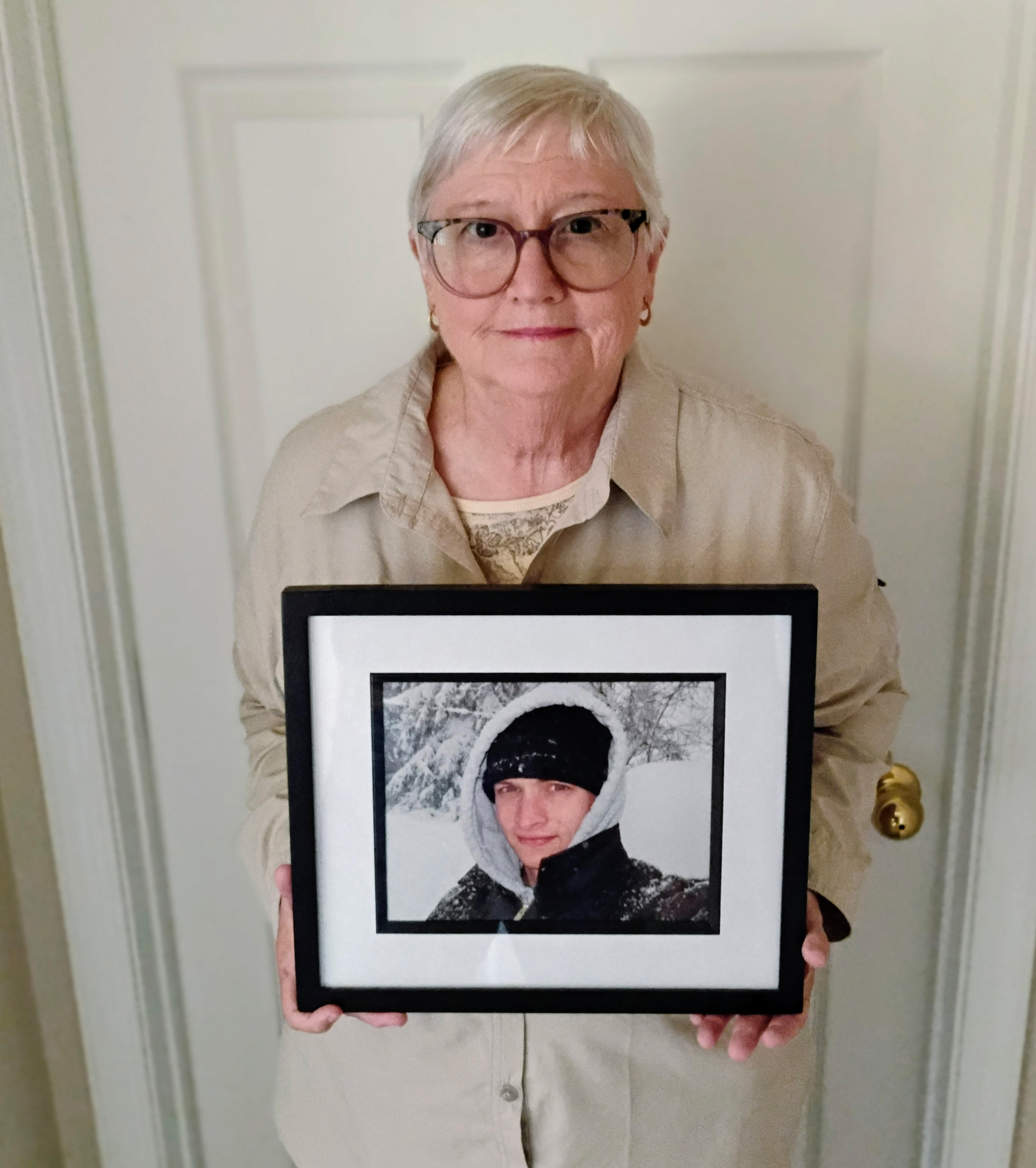
Dorothy Paugh’s father died by suicide in 1965. She lost her 25-year-old son, Peter, shown in the photo, to suicide in 2012. Both men shot themselves. Paugh has since become an advocate for gun policies that have been shown to reduce suicide deaths, such as red flag laws and mandatory waiting periods before completing a gun purchase. (C. Allen Paugh)
Her 25-year-old son, Peter, fatally shot himself in 2012. He’d recently bought a house with his girlfriend and hosted a birthday celebration for his brother. He’d purchased a gift ahead of Mother’s Day — five novels by Charles Dickens, Paugh’s favorite author — that Paugh received after his death.
Unlike in her father’s case, Paugh said, no one saw warning signs for Peter. “I did not know that my son was suicidal. I didn’t have a clue,” she said. Even if a red flag law existed then, she wouldn’t have thought to use it.
The people most vulnerable to firearm suicide usually aren’t identified as such by family members or clinicians, said Michael Anestis, a clinical psychologist and the executive director of the New Jersey Gun Violence Research Center.
Studies have shown that among people who die by suicide, those who used guns were less likely to have sought mental health care in the past. And most veterans and service members who die by gun suicide never tell anyone about their suicidal thoughts in the months leading to their death.
That’s why red flag laws are just a first step in suicide prevention, Anestis said. They target specific individuals at high risk — the aspect that makes such laws more politically palatable — but they do not apply to the many other people who are quietly suicidal.
Paugh’s son, Peter, fatally shot himself in 2012. Paugh says she didn’t see warning signs that he was suicidal. Peter is pictured here hiking the Appalachian Trail in 2009. (Dorothy Paugh)
Lessons From Road Safety
Nestadt, the Johns Hopkins psychiatrist, said the nation needs to approach suicide prevention the way it approaches car accidents.
“You’re not trying to figure out who’s at risk of an accident” by testing people’s reaction time or cataloging who gets into fender benders, Nestadt said.
Instead, governments implemented speed limits, passed seat belt laws, and required auto manufacturers to install air bags and shatter-resistant windshields. The crash death rate declined significantly.
Applying a similar strategy to suicide might involve requiring permits and background checks to buy a gun, as well as instituting waiting periods before completing the purchase.
One study found that enacting a permit-to-purchase law in Connecticut was associated with a roughly 15% decrease in gun suicide rates, while repealing such a law in Missouri was linked to a 16% increase in firearm suicide rates.
Most Suicides in America Involve a Gun
Suicide deaths by gun have been increasing for several years, even as suicides by suffocation — the second most common method — have been decreasing.
Source: <a href="https://wonder.cdc.gov/mcd-icd10-provisional.html" target="_blank" style="color:#0071ce">CDC WONDER</a>
<br>
Note: 2025 data is provisional. "All other methods combined" includes cut/pierce, drowning, fall, fire/flame, other land transport, other, and unspecified.
<br>
Credit: Aneri Pattani/KFF Health News
About three dozen states have enacted laws requiring owners to lock up their guns in homes where children live, a practice shown to reduce youth suicides. That’s an issue of particular importance, with gun suicide rates increasing 245% among Black youths and 98% among Latino youths since 2014.
Anestis said laws requiring permits and safe storage can also reduce homicides and other gun injuries.
Those types of violence not only hurt people directly but also increase their risk of suicide. Research suggests people who are exposed to gun violence in their community experience trauma and become habituated to the idea of injury or death. That “double whammy” makes them more likely to kill themselves, Anestis said.
Responsibility, Rights, and Saving Lives
Gun owners and firearm trade associations generally oppose universal measures, such as requiring permits and waiting periods. They prefer education campaigns that teach people how to recognize warning signs, talk about mental health, and safely store guns — initiatives that place responsibility on individuals.
The National Shooting Sports Foundation, which represents the firearms industry, has partnered with the American Foundation for Suicide Prevention to create flyers and brochures to be posted in gun shops.
“Our purpose is to provide educational materials to the firearm-owning community on how to help prevent suicide and save lives,” Bill Brassard, the NSSF’s senior director of suicide prevention initiatives, said in a statement.
The National Rifle Association said policies focused on guns miss deeper concerns that make someone suicidal, such as mental illness.
“Suicide is a serious issue that deserves serious solutions focused on the underlying causes, not on political efforts to restrict the rights of law-abiding Americans,” NRA spokesperson Justin Davis said in a statement. “A truly dangerous individual needs to be incapacitated, not just deprived of one particular means of harm.”
Those efforts give Paugh hope and fuel her passion to continue advocating for better mental health care, open conversations about suicide, and policies that decrease access to guns.
“It’s not a cure-all,” Paugh said of those policies. But “it does save lives.”
Having lost a parent and a child, she knows how valuable that can be.
“If you’re that one person or that person’s family, it’s all the difference in the world,” she said.
Health Journalists Visit Conservative Georgia District and Weigh AI Bioweapon Threat
Health Journalists Visit Conservative Georgia District and Weigh AI Bioweapon Threat
Sept. 19, 2026
Céline Gounder, KFF Health News’ editor-at-large for public health, discussed the findings of a recent cancer report on CBS News 24/7’s Mornings on Sept. 16. Gounder also discussed the potential of artificial intelligence to be used in developing biological weapons on CBS News’ CBS Mornings on Sept. 11.
KFF Health News Georgia correspondent Briah Lumpkins discussed a conservative Georgia congressional district that has remained supportive of President Donald Trump despite rising healthcare costs on WUGA’s The Georgia Health Report on Sept. 11.
KFF Health News Florida correspondent Daniel Chang discussed in Spanish how gun violence affects children in Florida on Radio Bilingüe’s Línea Abierta on Sept. 10.
Starting next year, most states will begin reviewing who is sick enough to be excused from new federal Medicaid work rules. People who study the nation’s public aid system have said they have an idea of headaches likely to come.
That’s because states already determine who’s sick enough to access Medicaid’s disability coverage — a process known to have administrative hurdles and blunders.
Take Taya Hailstone from Roundup, Montana. She’s 19 and is in remission from Hodgkin lymphoma. The cancer left lasting damage to her organs.
Hailstone has relied on Medicaid’s disability coverage for years. But the state decided last year she’s no longer eligible, after she opted not to renew her Social Security disability payments. She did that because she’d hoped to get healthy enough to work. But some days, her pain makes daily tasks hard. Hailstone said she still needs Medicaid to afford specialty treatment to manage the cancer’s aftereffects. But letters from her doctors show state officials didn’t ask for her latest medical records before switching her coverage.
“It feels like this process was made to make you give up,” Hailstone said.
Email Sign-Up
Subscribe to KFF Health News' free weekly newsletter, "The Week in Brief."
Incoming federal rules mean more adults will face a similar process — and potentially lose health coverage. To keep Medicaid, people accessing the low-cost health insurance solely based on their income must prove they’re working, going to school, or volunteering. Congressional Republicans’ One Big Beautiful Bill Act set a January deadline for states to start those checks.
Out of the 18.5 million people estimated to have to meet the new requirements, more than 40% live with a chronic health condition. Some will qualify for medical exemptions.
But with states set to review medical cases for a larger swath of Medicaid enrollees, now public aid researchers, attorneys, and advocates are worried the processes will be convoluted and lead to more people being denied coverage they need.
“This will be the story of millions of people,” said Anthony Wright, who heads the nonprofit Families USA.
Families USA and other organizations have argued the new rules force states to set up a patchwork of systems that together would be larger and more complicated than the Social Security Administration’s own disability system, which last year cost more than $5 billion to administer. For comparison, Wright said, the federal law provided $200 million for states to share as they set up the work requirements.
As for Hailstone, she’s trying to convince the state of Montana that her disabilities haven’t gone away. She’s appealing her case and has access to Medicaid in the meantime.
As state governments grapple with how to determine who’s sick enough to be excused from new Medicaid work requirements, some families are already struggling with what illnesses guarantee health coverage because of a disability.
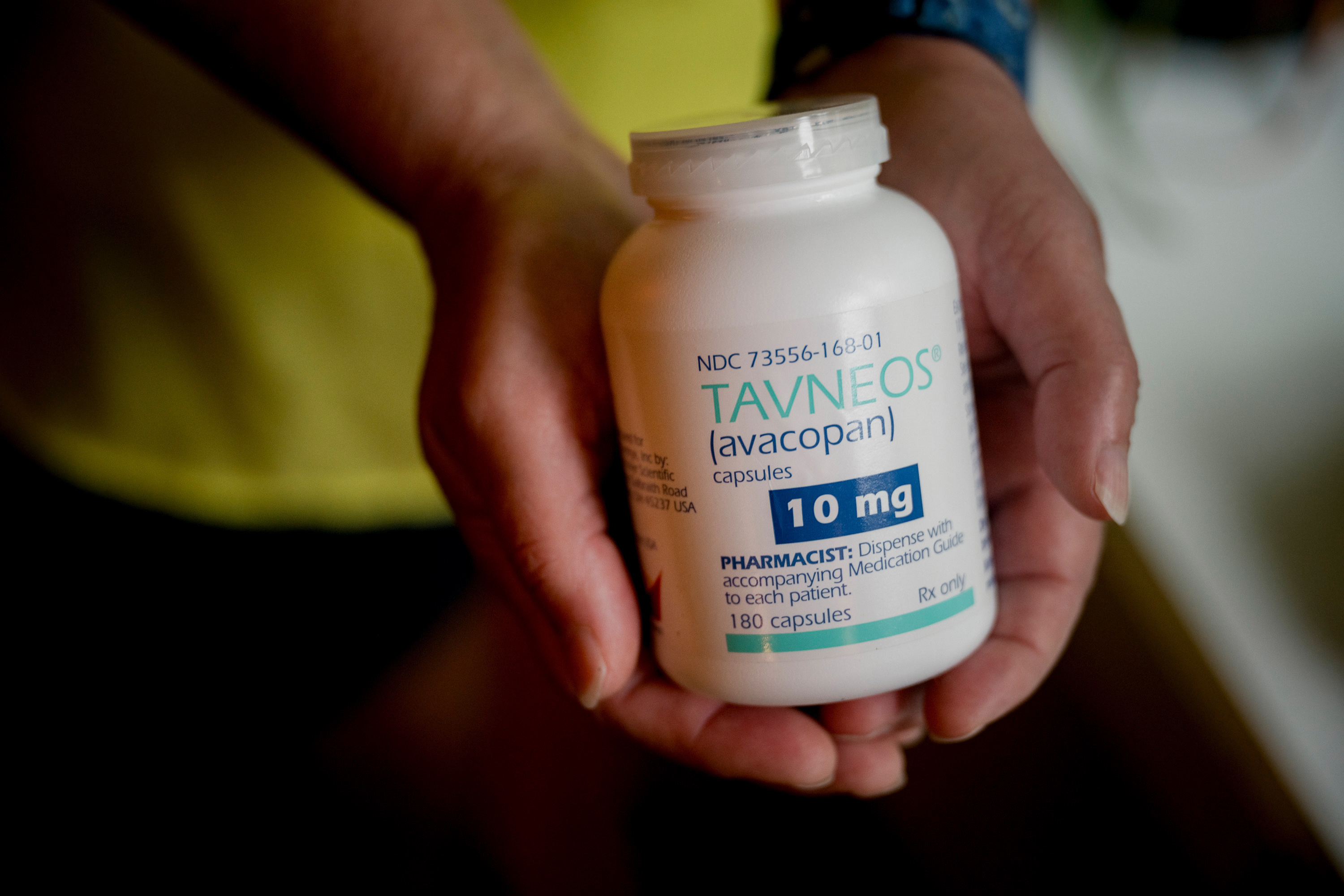
When the FDA was deciding whether to approve the drug Tavneos several years ago to treat a set of rare autoimmune diseases, agency experts argued that would be a mistake, according to FDA records.
As it often does, the FDA in 2021 approved the drug with a proviso: It required the manufacturer to conduct an additional years-long safety study once the drug was on the market.
Today, like many similar “postmarket” studies mandated by the FDA, that additional study is delayed, according to a federal database. As of last fall, only 21 of the planned 300 patients had been enrolled, the FDA said in an April letter and regulatory posting.
Meanwhile, the FDA has identified dozens of cases of liver damage “possibly” or “probably causally associated” with the drug. That was one of the potential side effects the postmarket study was meant to evaluate.
Tavneos illustrates the perils of the FDA’s approach to many drugs and medical devices — and the frequent lapses in follow-through.
A KFF Health News analysis of Food and Drug Administration data found hundreds of postmarket studies listed as delayed. In some cases, the work was delayed by more than a decade or the manufacturer was still developing a plan for the study.
As a result of delays, patients, doctors, and others could be left in a fog about the risks and benefits of the drugs or devices, even as they stake their money, their health, or their lives on the products.
Postmarket study requirements “have often proven toothless,” said cardiologist Sanket Dhruva, an associate professor of medicine at the University of California-San Francisco who has published related research.
The FDA’s reliance on postmarket studies reflects a balancing act.
Making new treatments available faster can save or improve lives, especially when patients with grim prognoses and no good options have little to lose. The full risks and benefits may be revealed only over the long term, and when therapies are used by far more people than even large clinical trials enroll.
But relying on post-approval studies to resolve questions risks exposing patients to products that do more harm than good. Whoever is paying the bills — patients, insurance companies, employers, or government health programs such as Medicare and Medicaid — can end up wasting money and rewarding manufacturers for useless or risky products.
“Doctors rely on this evidence, patients rely on this evidence, and if that evidence is not there, it’s going to lead to a lot of uncertainty,” Dhruva said.
Email Sign-Up
Subscribe to KFF Health News' free weekly newsletter, "The Week in Brief."
Trump administration policy changes designed to hasten drugs through FDA review could leave more riding on postmarket studies, medical researchers say.
For example, in February, FDA leaders announced that “the default requirement” for agency approvals will be one clinical trial instead of two.
Reducing pre-approval testing “will inevitably put a lot of pressure on the post-approval system,” said Aaron Kesselheim, a professor at Harvard Medical School who has analyzed postmarket studies.
FDA officials said the new policy would “substantially reduce costs” for manufacturers and “speed drugs to market.” Writing in The New England Journal of Medicine, they denied the change would compromise safety or efficacy, saying that “erroneous conclusions may be reached even with two, three, or four studies.”
In response to questions for this article, a spokesperson for the Department of Health and Human Services, which includes the FDA, said postmarket studies can experience delays for legitimate reasons. “Assessing the significance of any delay requires a case-specific review,” said the spokesperson, Emily Hilliard.
The fact that a study is delayed “should not be treated as evidence that a product has an unresolved safety or effectiveness issue,” Hilliard said.
Amgen, the company that makes Tavneos, is still working on the postmarket research the FDA mandated, company spokesperson Alison Chartan said, adding, “We remain committed to completing this important study.”
Amgen’s headquarters in Thousand Oaks, California, in May 2023. (Mario Tama/Getty Images)
Behind Schedule
An FDA database downloaded by KFF Health News in August tracks the progress of postmarket studies that makers of drugs or biologics — such as vaccines and gene therapies — were required to perform or promised to perform.
The database showed almost 600 were running behind schedule.
Of those, more than 250 originally had final reports due before July 31, 2026 — the date that, according to an FDA webpage, the database last had been updated.
About a third of ongoing studies were listed as delayed.
In some cases, the FDA has granted extensions. In others, it has denied them. And in rare instances, the products were discontinued before the studies ran their course.
Postmarket studies can involve clinical trials or other analyses of patient data. They can look at safety or efficacy. A product can be the subject of more than one postmarket study.
The nearly 600 delayed studies involved almost 350 products, KFF Health News found.
As of August, other FDA databases tracking medicaldevices listed dozens of postmarket studies as behind schedule.
Products included:
The CustomFlex Artificial Iris, a prosthesis implanted in the eye in place of damaged, defective, or congenitally missing irises. The protocol for a study in children was accepted in 2019, the database said. The study was meant to follow patients for five years. According to an FDA page downloaded in August, zero patients were enrolled.
Barbara Fant of Clinical Research Consultants, to whom the FDA’s 2018 letter approving the product was addressed, said the rarity of an eye disease called aniridia poses challenges for post-approval studies. The German manufacturer, the U.S. distributor, and Clinical Research Consultants are working with the FDA to identify alternative ways to fulfill the postmarket requirements, Fant said.
“Confirming the long-term safety of the device remains a top priority for both the study team and FDA,” Fant said.
Paxlovid, a treatment for covid. A study to assess its safety in pregnant women was originally to be completed by the end of 2024, the FDA database said. “The trial completion and final report milestones were missed,” the database said.
Pfizer, the manufacturer, is working with the FDA and remains committed to “submitting results as soon as practicable,” Pfizer spokesperson Jerica Pitts said.
The Scandinavian Total Ankle Replacement system. The device and the original protocol for the clinical trial were approved in 2009. The study was meant to include a minimum of 500 subjects, the database said, but the actual number enrolled was 142. Almost half those patients had one or more adverse events, with dozens of “reoperations,” “revisions,” or “removals,” the database said.
Rachel Colloff and Cristina Pasquino — spokespeople for Enovis, which markets STAR Ankle — did not respond to multiple inquiries. Jenny Braga, a spokesperson for Stryker, which previously sold the product, did not answer questions about the postmarket study.
Oxaydo (originally named Oxecta), a form of the potentially addictive opioid painkiller oxycodone touted as designed to deter abuse. When the FDA approved it in 2011, it required the manufacturer, part of Pfizer, to conduct a postmarket study to assess whether it reduces “misuse and abuse, and their consequences: overdose, death and addiction.” The final report was originally scheduled to be submitted in 2016.
Control of the product passed from company to company over the years until 2023, when Acura Pharmaceuticals said in a Securities and Exchange Commission filing that patents on Oxaydo would begin expiring that year and it didn’t intend to continue marketing the drug.
The FDA has enforcement powers and uses them “where appropriate,” HHS’ Hilliard said. She did not provide requested details, and she did not answer questions about the studies listed above.
Delay Can Pay
For manufacturers, delay can pay, Harvard’s Kesselheim said. While postmarket studies are ongoing, companies can continue to sell the products.
“Medicare and Medicaid spent more than $18 billion from 2018 to 2021 for accelerated approval drugs with incomplete confirmatory trials past their original planned completion dates,” the HHS Office of Inspector General estimated in 2022.
The FDA can demand postmarket studies for a variety of reasons, including to address concerns that arise after a product has been approved. Some look at uses not covered by the original approval, and some are meant to shed light on serious risks that are already known.
In April, when it approved Foundayo, a weight loss drug made by Eli Lilly, the FDA required the company to conduct additional research to assess a variety of concerns, including “retained gastric contents,” “major adverse cardiovascular events,” and “drug-induced liver injury,” as well as effects of exposure during pregnancy, such as “major congenital malformations,” “spontaneous abortions,” and “stillbirths.”
The FDA said it approved the drug under the new Commissioner’s National Priority Voucher program, intended for products that “address critical national health priorities.” The program strives for an “ultra-fast” review, the FDA has said — one to two months, instead of six months or more with other expedited pathways.
“Postmarketing requirements and enhanced safety monitoring are a routine part of the FDA’s approach to evaluating newly approved medicines,” Eli Lilly spokesperson Kristiane Silva Bello said, “including ongoing monitoring in areas identified during clinical development.”
‘False Hope’
The FDA waded into a world of uncertainty in 2016 when it granted accelerated approval to a drug for Duchenne muscular dystrophy, a degenerative disease that primarily affects boys, disabling them at a young age and ultimately killing them.
Agency scientists had found that the drug, Exondys 51, was unproven and argued against greenlighting it.
Ellis Unger, then a senior drug evaluation official at the FDA, wrote in an internal memo that “thousands of patients and their families would be given false hope in exchange for hardship and risk.”
The manufacturer, Sarepta Therapeutics, conceded the uncertainty. “A clinical benefit of EXONDYS 51 has not been established,” it said when the drug, also known by the generic name eteplirsen, was approved.
The drug, the first FDA-approved treatment for Duchenne muscular dystrophy, targeted a subset of patients with the disease.
The FDA required Sarepta to conduct further studies and warned that it could withdraw approval if postmarket trials failed to verify a clinical benefit or were “not conducted with due diligence.”
Unger issued a warning of his own: “FDA has not succeeded in withdrawing the marketing of a single drug for lack of verification of clinical benefit following accelerated approval. The reality is that if eteplirsen is given accelerated approval, it is highly likely to remain on the market indefinitely, irrespective of whether or not efficacy is verified.”
Sarepta was originally required to submit a final report on a postmarket study by a May 2021 deadline, according to an FDA database and a 2016 FDA letter to the company.
Almost a decade after the drug was approved, and more than five years after that deadline, the study was listed in an FDA database as delayed.
“The final report milestone was missed, because the sponsor requested milestone extensions due to study delays,” the database said.
Meanwhile, in 2022 the website Pharmaceutical Technology ranked Exondys 51 as the second-most expensive drug in the U.S., at an annual cost of $750,000 to $1.5 million.
Last year, the drug generated $538 million in sales for Sarepta, according to a company presentation to investors.
Sarepta found it difficult to recruit patients for the postmarket clinical trial, company spokesperson Tracy Sorrentino said. The target population is small, patients were hesitant to enroll, and Sarepta was competing with other clinical trials for participants, Sorrentino said.
The study has been fully enrolled since 2023, Sorrentino said, and the company plans to provide an initial look at the data late this year.
‘Manipulated’
Amgen is the maker of the drug Tavneos. (Hannah Yoon/Bloomberg via Getty Images)
Amgen has cited similar challenges, even as Tavneos generated $459 million in global sales last year.
When an approved treatment is available, patients may be reluctant to enroll in a study in which they could be given a placebo, Amgen’s Chartan said.
The clinical trial was originally supposed to be done by the end of 2030. As of July 24, just 49 patients had been enrolled, Chartan said.
The FDA has said the study was to include 300 patients, and each patient enrolled must be followed for five years, said Hilliard, the HHS spokesperson.
Tavneos was approved to treat severe cases of a group of diseases — known by the shorthand ANCA-associated vasculitis — in which, as the Cleveland Clinic explains, the immune system inflicts potentially fatal damage on blood vessels and organs.
“As of January 2026, estimated real-world exposure” to Tavneos “exceeds 25,000 patient-years globally, consisting of over 6,500 in the United States and 19,000 abroad,” Amgen has said. (For context, one patient taking a drug for five years would amount to five “patient-years.”)
A clinical trial sponsored by ChemoCentryx to secure approval of Tavneos failed to prove it was effective, the FDA now alleges. Instead of disclosing that outcome to the FDA, company personnel “manipulated” the results, the FDA alleged in an April letter to Amgen.
Amgen, the parent company of ChemoCentryx, has denied the results were manipulated and has said the data “remain valid.”
The company has a lot riding on the outcome. Tavneos can cost more than $220,000 per year, according to the drug discount website GoodRx, and when Amgen acquired ChemoCentryx in 2022 for $3.7 billion, Tavneos was the only drug ChemoCentryx had brought to market.
In a June letter to the FDA, Amgen said the benefits of Tavneos outweigh the risks.
The FDA disagrees.
The FDA “can no longer conclude that there is, or has ever been, a valid demonstration of substantial evidence of effectiveness for TAVNEOS,” the agency wrote.
Citing 76 cases of DILI — drug-induced liver injury — the agency said it was “increasingly concerned about the safety profile of TAVNEOS.” Without proof of effectiveness, at least for its approved use, “the drug’s benefits cannot outweigh its known risks,” the FDA wrote.
Data reporter Maia Rosenfeld contributed to this report.
Sticker Shock at the Doctor’s Office Could Motivate Midterm Voters
Healthcare prices are likely to keep increasing next year. As midterm elections approach, candidates are laying out their plans to tackle these growing expenses.
KFF Health News chief Washington correspondent Julie Rovner joined WAMU’s Health Hub on Sept. 16 to explain how healthcare could play a critical role in the midterm elections. She said similar cost increases in the early 2000s led to the debate that became the Affordable Care Act.
“We’re seeing people have to pay more in their — not just premiums — but their deductibles, how much they pay before their insurance kicks in, and how much they pay when they go to the doctor,” said Rovner, host of the What the Health? From KFF Health News podcast.
In recent years, it’s not uncommon for healthcare providers to ask for payment upfront.
“Now you get there, and they say, ‘Can we have your credit card?’ before you even get to go in and get your care,” Rovner said.
Cost-Saving Medicaid Meal Deliveries Threatened by Cuts, Policy Uncertainty
Cost-Saving Medicaid Meal Deliveries Threatened by Cuts, Policy Uncertainty
Volunteers prepare food at Community Servings, a Boston nonprofit that produces medically tailored meals. (Robin Lubbock/WBUR)
Cost-Saving Medicaid Meal Deliveries Threatened by Cuts, Policy Uncertainty
On a weekday morning in a quiet Boston neighborhood, a kitchen bustled with activity. Volunteers sliced chicken breasts, stuffed bell peppers, filled trays, and carefully labeled each item. It was part of an experiment to offer nutritious and medically tailored meals to Medicaid patients who are unable to shop for groceries and cook for themselves.
“Once I started to eat these meals that were geared toward my illness, I built up my muscle mass again, built up my strength, built up my confidence in myself,” said Vanessa Georges, who is in remission from throat cancer and said she would struggle to consume enough calories without the deliveries. “These meals have given me a second chance.”
Georges said she noticed another benefit from the meals: She spends less time at the doctor’s office.
Researchers have found evidence backing her observation. About 1,900 Massachusetts residents who, like Georges, received medically tailored meals for at least three months needed less medical care, according to a study published in the journal Nature Medicine. They had 20% fewer emergency department visits and 31% fewer hospitalizations than similar patients who did not receive meals.
“It actually saves the healthcare system money,” said Dariush Mozaffarian, a cardiologist and professor at Tufts University who led the study. “That’s a really big deal, because most things in healthcare don’t.”
The research from Massachusetts adds to evidence that medically tailored meals could save states money — in addition to improving health. Yet such programs could land on the chopping block as states look to tighten spending under Trump administration budget cuts, even as federal officials argue that food is a critical component of health.
Email Sign-Up
Subscribe to KFF Health News' free Morning Briefing.
Medicaid Budget Cuts Loom
The 2025 law known as the One Big Beautiful Bill Act slashed projected Medicaid funding by more than $900 billion. Many Republicans who backed the bill believe federal health spending is too high and riddled with fraud. Sen. John Kennedy, a Louisiana Republican, for example, has accused California of “outrageous fraud” for using Medicaid dollars to fund housing and nutrition programs.
Amaya Diana, a policy analyst at KFF, said states will have to make tough choices in the next few years as they figure out how to fill funding gaps. “If states are not able to offset the loss of federal funds with new taxes or reductions in other state spending, they may have to make program cuts,” she said. (KFF is a health information nonprofit that includes KFF Health News.)
Thirteen states have received federal waivers to use Medicaid dollars to pay for meals — part of an approach known as “food is medicine.” Three other programs are awaiting federal approval.
President Donald Trump’s support for social services has wavered. While the first Trump administration allowed states to pursue medically tailored meals and other social supports, the second Trump administration rescinded Biden-era guidance for Medicaid initiatives that address social needs. It hasn’t detailed a new policy. Administration officials have warned that they will be more focused on the budget impacts of such initiatives.
“They signaled they’re going to be a lot more skeptical,” said Kurt Hager, an assistant professor at the University of Massachusetts Chan Medical School who studies nutrition programs and helped lead the Massachusetts study. “Instead of using a broad-based approach nationwide, they’re going to make decisions on a state-by-state basis.”
At the same time, health leaders in Trump’s administration have made nutrition a major focus, including by promoting less-processed foods. Robert F. Kennedy Jr., who leads the Department of Health and Human Services, and Mehmet Oz, administrator of the Centers for Medicare & Medicaid Services, have pushed hospitals to serve healthier foods to boost patient outcomes.
Trays of stuffed peppers and carrots from Community Servings are ready to be sealed and delivered to Boston-area residents who receive medically tailored meals. (Robin Lubbock/WBUR)
The healthcare system is often willing to pay for surgeries, Oz said in a social media video in June, “but not always willing to pay for the nutrition that might help prevent those outcomes in the first place. That’s bothered me my whole career.” He added that the agency is evaluating several strategies, including medically tailored meals, to prevent illness and hospitalization. CMS officials did not respond to several emailed requests for comment for this article.
Katie Garfield, who studies social determinants of health at Harvard Law School’s Center for Health Law and Policy Innovation, said the lack of federal guidance is stirring uncertainty for states that want to pursue nutrition programs in Medicaid. “We’re still waiting to see that big step forward around ‘food is medicine’ interventions,” she said. “We need to see that step forward to resolve some of the uncertainty.”
Lawmakers have had a hard time engaging administration officials on medically tailored meals, said U.S. Rep. Jim McGovern, a Massachusetts Democrat who sponsored a bill that would pilot meal deliveries for some chronically ill seniors on Medicare. The legislation has yet to come up for a vote.
“I had thought, based on some of his rhetoric before he entered the Trump administration, that RFK Jr. would be a natural ally on this,” McGovern said. “But we can’t seem to get his attention.”
The Costs of Poor Nutrition
Some companies have been accused of billing Medicaid for meals that were neither healthy nor nutritious, raising concerns about lax regulation of these programs.
But at Community Servings in Boston, the food is prepared with specific attention to sugar, salt, fat, vitamins, and minerals and is based on a person’s health needs, said David Waters, chief executive of the nonprofit. Many recipients require food that is mild or low in fiber, for example.
“What we’re able to do is to work with your healthcare provider to understand your health realities — what your diagnoses are, what your medications are, side effects, food allergies, cultural norms — and then prescribe a diet for you that is scratch-made,” Waters said.
The Massachusetts researchers found that the meals — at a cost of $125 per person per week — essentially paid for themselves. Patients with heart disease used about $10,000 less in healthcare services over six months, and patients with kidney disease used $12,000 less in healthcare. There were also savings for people with diabetes, depression, and anxiety.
“Those are pretty big numbers when you think of how expensive those diseases can be and the prevalence in the population,” Waters said.
Nationally, researchers estimate, 10 million Americans would benefit from medically tailored meals, though only a small fraction are enrolled.
“Poor nutrition is the top cause of poor health in this country. It’s the top cause of preventable healthcare spending,” said Mozaffarian, director of the Food is Medicine Institute at Tufts. He has estimated that medically tailored meals could help patients avoid 1.6 million hospitalizations and save the U.S. $13.6 billion in healthcare costs each year.
A Weekly Delivery That Makes a Difference
Steve Honyotski receives 10 meals at his Boston home each week, cooked fresh and delivered cold or flash-frozen. They’re ready to eat after just a couple of minutes in the microwave.
“The carrot ginger soup is my favorite,” Honyotski said.
Honyotski, 71, lives with several chronic conditions, including diabetes, obesity, and high blood pressure. He said he’s noticed improvements in his health since he started eating medically tailored meals. He needs less insulin to control his diabetes, and he’s lost enough weight to delay a knee replacement surgery.
Community Servings is a nonprofit that provides medically tailored meals in the Jamaica Plain neighborhood of Boston. (Robin Lubbock/WBUR)
For now, those meals will keep coming. And Massachusetts’ Medicaid director, Ryan Schwarz, said the state will seek federal approval to continue medically tailored meals in the coming years. “We feel very strongly committed to continuing these services,” he said.
In North Carolina, researchers found that food and housing supports lowered Medicaid spending over time. Yet even with federal approval for medically tailored meals, and evidence that the meals — along with housing and transportation support — were helping people, North Carolina state lawmakers suspended the services in 2025 over budget worries. After budget deliberations this summer, state legislators changed course and decided to partially fund the program.
“To me, that’s a signal of what might occur in other states as these Medicaid cuts hit,” said Hager, the UMass researcher. “Even though they have the authority to run these programs, it might be a lot harder for the states to actually implement them.”
This article is from a partnership that includes WBUR, NPR, and KFF Health News.
Listen to the Latest ‘KFF Health News Minute’
Listen to the Latest ‘KFF Health News Minute’
Sept. 17, 2026
The KFF Health News Minute is available every Thursday via direct download or the RSS feed.
Sept. 17
Zach Dyer [DYE-er] reads the week’s news: The high cost of fertility treatment is making some Americans look abroad for help getting pregnant. Plus, a nonprofit in Austin, Texas, is trying to keep its city’s music scenes going by helping artists pay for health insurance.
0:000:00
Speed
Sept. 10
Jackie Fortiér [FOR-tee-ay] reads the week’s news: Laser cataract surgery, which can be pricier, may not be worth the extra cost. Plus, the federal government is pulling funding for test strips that can help users detect fentanyl in drugs in favor of other public health approaches.
0:000:00
Speed
Aug. 28
Zach Dyer [DYE-er] reads the week’s news: Violence against hospital workers fuels calls for mandatory staffing rules. Plus, tips on how to find a clinical trial.
0:000:00
Speed
Aug. 27
Katheryn Houghton [CATH-er-in HOW-tun] reads the week’s news: A wristband with the words “I Gave Birth” could be a lifesaving tool for new moms, and many homeless people will have to prove they’re working to stay on Medicaid.
0:000:00
Speed
Aug. 20
Arielle Zionts [arr-ee-ELL ZY-ence] reads the week’s news: Pediatricians try to persuade more parents to vaccinate their kids amid measles outbreaks. Plus, how hospital monopolies drive up costs for patients and insurers.
0:000:00
Speed
Aug. 13
Rachel Spears reads the week’s news: Many people with disabilities fear that a new Justice Department legal opinion could roll back protections that have given them access to in-home care. Plus, some cities are using 911 to respond to mental health distress calls with mobile crisis teams instead of police.
0:000:00
Speed
Aug. 6
Katheryn Houghton [CATH-er-in HOW-tun] reads the week’s news: Some older adults are seeking roommates to help them age in place. Plus, doctors say they shouldn’t be the ones determining if someone is too sick to comply with Medicaid’s new work rules.
0:000:00
Speed
July 30
Zach Dyer [DYE-er] reads this week’s news: Health insurance companies promised to make it easier to get doctor-ordered care, but patients are still waiting. Plus, a common surgery might not be the best way to solve knee pain.
0:000:00
Speed
July 23
Jackie Fortiér [FOR-tee-ay] reads this week’s news: Coverage disruptions can have fatal consequences when switching health plans. Plus, more states are shaming employers that use your tax dollars to cover health costs for their low-income workers.
0:000:00
Speed
July 16
Sam Whitehead reads the week’s news: Some health plans are pocketing their enrollees’ drug discounts, while many Affordable Care Act insurers want to raise rates by double digits next year.
0:000:00
Speed
July 9
Rachel Spears reads the week’s news: When babies receiving infant formula allegedly get sick or die, what happens next is largely up to the companies that make it. Plus, abortions continue to rise four years after the overturning of Roe v. Wade.
0:000:00
Speed
July 2
Jackie Fortiér [FOR-tee-ay] reads the week’s news: More Americans than ever are surviving cancer and face lingering mental health issues. Plus, tips to get your health insurance company to pay for a GLP-1 drug.
0:000:00
Speed
June 25
Zach Dyer [DYE-er] reads the week’s news: The U.S. is getting its first new sunscreen ingredient in decades. Plus, at-home cancer tests have their limits.
0:000:00
Speed
June 18
Katheryn Houghton [CATH-er-in HOW-tun] reads the week’s news: New rules that require millions of Americans to work to access Medicaid are stricter than many expected. Plus, the federal Family and Medical Leave Act protects many people’s jobs — but there’s a big catch.
0:000:00
Speed
June 11
Sam Whitehead reads the week’s news: More Americans are getting access to physician-assisted suicide as states legalize the practice. Plus, hundreds of people allege medical neglect in ICE detention centers.
0:000:00
Speed
June 4
Arielle Zionts [arr-ee-ELL ZY-ence] reads the week’s news: For some older adults, the risks of certain preventive screenings might outweigh the rewards. Plus, cost spikes for Obamacare plans have consumers seeking cheaper health coverage, which is often less comprehensive.
0:000:00
Speed
May 28
Jackie Fortiér [FOR-tee-ay] reads this week’s news: Suicide prevention experts argue that improving Americans’ financial well-being could save lives. Plus, the Trump administration proposes looser artificial intelligence safeguards to speed innovation in healthcare.
0:000:00
Speed
Listen to the Latest ‘KFF Health News Minute’
Listen to the Latest ‘KFF Health News Minute’
Sept. 17, 2026
The KFF Health News Minute is available every Thursday via direct download or the RSS feed.
Sept. 17
Zach Dyer [DYE-er] reads the week’s news: The high cost of fertility treatment is making some Americans look abroad for help getting pregnant. Plus, a nonprofit in Austin, Texas, is trying to keep its city’s music scenes going by helping artists pay for health insurance.
0:000:00
Speed
Sept. 10
Jackie Fortiér [FOR-tee-ay] reads the week’s news: Laser cataract surgery, which can be pricier, may not be worth the extra cost. Plus, the federal government is pulling funding for test strips that can help users detect fentanyl in drugs in favor of other public health approaches.
0:000:00
Speed
Aug. 28
Zach Dyer [DYE-er] reads the week’s news: Violence against hospital workers fuels calls for mandatory staffing rules. Plus, tips on how to find a clinical trial.
0:000:00
Speed
Aug. 27
Katheryn Houghton [CATH-er-in HOW-tun] reads the week’s news: A wristband with the words “I Gave Birth” could be a lifesaving tool for new moms, and many homeless people will have to prove they’re working to stay on Medicaid.
0:000:00
Speed
Aug. 20
Arielle Zionts [arr-ee-ELL ZY-ence] reads the week’s news: Pediatricians try to persuade more parents to vaccinate their kids amid measles outbreaks. Plus, how hospital monopolies drive up costs for patients and insurers.
0:000:00
Speed
Aug. 13
Rachel Spears reads the week’s news: Many people with disabilities fear that a new Justice Department legal opinion could roll back protections that have given them access to in-home care. Plus, some cities are using 911 to respond to mental health distress calls with mobile crisis teams instead of police.
0:000:00
Speed
Aug. 6
Katheryn Houghton [CATH-er-in HOW-tun] reads the week’s news: Some older adults are seeking roommates to help them age in place. Plus, doctors say they shouldn’t be the ones determining if someone is too sick to comply with Medicaid’s new work rules.
0:000:00
Speed
July 30
Zach Dyer [DYE-er] reads this week’s news: Health insurance companies promised to make it easier to get doctor-ordered care, but patients are still waiting. Plus, a common surgery might not be the best way to solve knee pain.
0:000:00
Speed
July 23
Jackie Fortiér [FOR-tee-ay] reads this week’s news: Coverage disruptions can have fatal consequences when switching health plans. Plus, more states are shaming employers that use your tax dollars to cover health costs for their low-income workers.
0:000:00
Speed
July 16
Sam Whitehead reads the week’s news: Some health plans are pocketing their enrollees’ drug discounts, while many Affordable Care Act insurers want to raise rates by double digits next year.
0:000:00
Speed
July 9
Rachel Spears reads the week’s news: When babies receiving infant formula allegedly get sick or die, what happens next is largely up to the companies that make it. Plus, abortions continue to rise four years after the overturning of Roe v. Wade.
0:000:00
Speed
July 2
Jackie Fortiér [FOR-tee-ay] reads the week’s news: More Americans than ever are surviving cancer and face lingering mental health issues. Plus, tips to get your health insurance company to pay for a GLP-1 drug.
0:000:00
Speed
June 25
Zach Dyer [DYE-er] reads the week’s news: The U.S. is getting its first new sunscreen ingredient in decades. Plus, at-home cancer tests have their limits.
0:000:00
Speed
June 18
Katheryn Houghton [CATH-er-in HOW-tun] reads the week’s news: New rules that require millions of Americans to work to access Medicaid are stricter than many expected. Plus, the federal Family and Medical Leave Act protects many people’s jobs — but there’s a big catch.
0:000:00
Speed
June 11
Sam Whitehead reads the week’s news: More Americans are getting access to physician-assisted suicide as states legalize the practice. Plus, hundreds of people allege medical neglect in ICE detention centers.
0:000:00
Speed
June 4
Arielle Zionts [arr-ee-ELL ZY-ence] reads the week’s news: For some older adults, the risks of certain preventive screenings might outweigh the rewards. Plus, cost spikes for Obamacare plans have consumers seeking cheaper health coverage, which is often less comprehensive.
0:000:00
Speed
May 28
Jackie Fortiér [FOR-tee-ay] reads this week’s news: Suicide prevention experts argue that improving Americans’ financial well-being could save lives. Plus, the Trump administration proposes looser artificial intelligence safeguards to speed innovation in healthcare.
The scenario often unfolds like this: Medical researchers investigate a frequently used drug and report that it’s less effective for older patients than previously thought, or that its risks outweigh its benefits in older adults. More studies follow, confirming those findings.
After a few years, medical associations revise their guidelines, warning that the drug in question should be avoided or at least prescribed more selectively. It might be added to the Beers Criteria, an influential list of potentially inappropriate medications for older patients, published by the American Geriatrics Society.
If the drug’s role is preventive, the U.S. Preventive Services Task Force, an independent expert panel, may weigh in with cautions. The FDA may issue “black box” warnings about concerning side effects.
After a few more years, researchers look at broad national data to see whether use of this drug declined. Often, the answer is: Yes, but not enough. Sometimes, though, use didn’t decline much at all or actually increased.
“Medications are like barnacles,” said Michael Steinman, a geriatrician at the University of California-San Francisco and co-director of the U.S. Deprescribing Research Network. “They’re easy to start, but they can be hard to stop.”
This medical inertia partly reflects the time lag involved in disseminating findings. “Clinicians have a million things they need to know and attend to, and information may take a while to get to them,” Steinman said.
But it also reflects the way “clinicians and patients get used to treating conditions in certain ways,” he said. “They become ingrained habits.” Finding alternative approaches is challenging, so “it’s easy to go with what you know.”
Recent studies of three medications or classes of drugs widely used among older Americans illustrate the problem.
Email Sign-Up
Subscribe to KFF Health News' free Morning Briefing.
The Drawbacks of Benzodiazepines
Scientists began raising alarms about benzodiazepines more than 20 years ago. Prescribed for insomnia and anxiety, “they offer prompt relief,” said Mark Olfson, a psychiatrist and epidemiologist at Columbia University.
The problem? Benzodiazepines (including Valium, Xanax, and Ativan) and the related “Z” drugs (Ambien, Lunesta) “may impair balance, coordination, and cognition that can translate into falls and fractures and motor vehicle accidents,” Olfson said. In patients also taking opioids for pain, benzodiazepines can cause overdoses.
Moreover, “once you’ve taken them for a period of time, you develop a dependence,” Olfson added. “When you come off them, you may develop withdrawal symptoms.”
So what’s happened to benzo use among older adults, who are more sensitive to these effects? In a recent examination of prescribing trends, published in the Annals of Internal Medicine, Olfson and his team reported progress. Among people 65 and older, the rate of patients filling prescriptions for benzos dropped to 11.5% in 2024, from about 14% in 2015.
But that decline has stalled since 2020, perhaps related to the covid-19 pandemic. Moreover, prescribed use actually rose among those over 75, from 12% in 2020 to about 13% four years later. Dispensing through pharmacies in long-term care facilities more than doubled. And about a third of users were taking the drug for longer than six months, increasing the likelihood of dependence. “It’s worrisome,” Olfson said.
But he cautioned that patients shouldn’t stop benzodiazepines suddenly or on their own, which can provoke withdrawal. “It requires supervised tapering” with a medical professional, he said. “It takes many weeks.”
Overprescribing Antibiotics
For years, the standard treatment for diverticulitis, the inflammation or infection of small pouches that form in the colon, was antibiotics, primarily fluoroquinolones (like Cipro and Levaquin) or amoxicillin-clavulanate (Augmentin).
“It was unquestioned,” said Jesse Sutton, a pharmacist and researcher at the Minneapolis Veterans Affairs healthcare system. “Antibiotics are safe and effective, great, lifesaving drugs, so the mindset was: When in doubt, use them.”
Clinical trials had shown that, for this condition, antibiotics had little or no effect on mortality, the need for surgery, complications, or recurrences. “They hadn’t improved anything,” Sutton said.
And as with any drug, “there are downsides, unintended consequences,” he said. “Side effects from antibiotics account for a substantial amount of emergency room visits” for symptoms like nausea, vomiting, and diarrhea. Antibiotics heighten the risk of the virulent C. difficile infection, too.
Plus, “the more you use antibiotics, the less they work in the future,” Sutton said. The World Health Organization has deemed antimicrobial resistance “a major global health threat.”
So Sutton and his colleagues, studying treatment in 70,000 visits to 120 VA facilities, expected to see antibiotic use for uncomplicated diverticulitis decline over 10 years.
Instead, they reported recently in the Annals of Internal Medicine that antibiotic prescriptions remained nearly universal at 97% of visits, guidelines or no guidelines. The patients would most likely have done as well with a few days of Tylenol and a clear liquid diet.
Antibiotic overuse remains common for other conditions of later life, too, including the kind of urinary tract infections that cause no troublesome symptoms and upper respiratory infections that are typically viral, not bacterial.
In such cases, when a doctor prescribes an antibiotic, “I’d encourage patients to say, ‘Please explain the rationale for doing this,’” Sutton said. “If they don’t, it’s OK to press pause.”
When Aspirin Isn’t the Answer
Aspirin is different. Because it’s cheap and sold over the counter, anybody can start taking it on their own — and millions of older Americans do, thinking it will help prevent cardiac problems.
For people who’ve already had a heart attack, stroke, or cardiac intervention like a stent or bypass surgery, daily low-dose aspirin for “secondary prevention” does lower the odds of another event, studies have demonstrated.
But for “primary prevention” in people who haven’t had one, the guidelines changed in 2019, when the American College of Cardiology and the American Heart Association recommended against aspirin for this purpose in those 70 or older. The U.S. Preventive Services Task Force went further, warning against aspirin for primary prevention starting at age 60.
Large clinical trials had shown scant benefit for aspirin as a primary prevention measure, but there were harms, notably gastrointestinal bleeding. “As we age, the risks of bleeding go up,” said Timothy Anderson, an internist at the University of Pittsburgh who co-directs its Prescribing Wisely Lab. More rarely, but more seriously, aspirin can cause bleeding in the brain.
In a JAMA study published last year, Anderson and his co-author found the message was getting through: Aspirin use for primary prevention, as reported in the National Health and Nutrition Examination Survey, had dropped substantially from 2011 to 2023. But more than a third of those 70 or older were still taking it.
Some caveats: A subgroup of older adults with high risk factors for cardiovascular disease may benefit from aspirin for primary prevention. And, confusingly, some evidence suggests that older patients already taking aspirin face a higher risk of cardiovascular disease if they discontinue it.
“Step 1 is a conversation with your primary care physician” about aspirin, Anderson said. “‘Is this still right for me as I get older?’”
Older patients taking aspirin, many without any medical guidance, “are interested in reducing their risk of heart attack and stroke,” he said. “They’re trying to be proactive and healthy.” But with blood pressure medications and statins for cholesterol, “we have better strategies than aspirin for that.”
The New Old Age is produced through a partnership with The New York Times.
California Eyes Prison Heat Protections That Fall Short of Workplace Standards
California Eyes Prison Heat Protections That Fall Short of Workplace Standards
A California Department of Corrections and Rehabilitation officer stands guard in a housing block at San Quentin State Prison, since renamed San Quentin Rehabilitation Center, in August 2016. (Justin Sullivan/Getty Images)
As Californians have weathered relentless heat waves, state workplace safety regulators have repeatedly reminded employers to protect employees from heat illness by providing water, shade, cooldown areas, and additional rest breaks when temperatures climb.
But there’s a notable exception in the state’s heat safety rules: Not covered are the nurses, guards, staff, and tens of thousands of incarcerated people who work in California’s aging correctional facilities, which are largely not air-conditioned.
In 2024, California adopted landmark rules intended to protect more than 1 million workers who toil in sweltering warehouses, kitchens, factories, and other indoor workplaces. But the state Occupational Safety and Health Standards Board exempted prisons and local government detention and juvenile facilities after Democratic Gov. Gavin Newsom’s administration warned the rules could cost the state billions.
Two years later, the Newsom administration has put forward weaker indoor heat standards for California’s correctional facilities, alarming worker advocates and public health experts who argue they would provide inadequate protections from extreme heat as the risks worsen due to climate change. Regulators with the state’s Division of Occupational Safety and Health, or Cal/OSHA, have proposed protections that wouldn’t kick in until temperatures reach 87 degrees — 5 degrees higher than for other indoor workplaces, according to draft rules released in May.
“It’s basically a second-class standard, and we don’t accept that correction workers get weaker protections than everybody else, with no scientific or medical basis,” said Stephen Knight, co-executive director of Worksafe, a California nonprofit that pushes for workplace health and safety protections. “The human body doesn’t handle heat differently in a prison than, you know, an Amazon warehouse.”
Extreme heat is the No. 1 weather-related killer in the U.S., with heat-related deaths and illness spiking during heat waves as elevated temperatures exacerbate other health problems, including cardiovascular and respiratory diseases. Even among people without preexisting conditions, prolonged exposure to heat without the opportunity to cool off can cause heat exhaustion and heat stroke, which can lead to death.
State agencies have estimated the price tag to cool California’s prisons could run from $900,000 to $6 billion in upfront costs, although the Newsom administration has refused to provide detailed information and declined interview requests.
“These facilities were exempted from the indoor heat standard due to the unique challenges in the correctional institutions with complying,” Eric Berg, Cal/OSHA’s deputy chief of health, research, and standards, told stakeholders at a recent meeting. He added that “we’re creating a separate standard to kind of address their unique conditions they have in those facilities.”
Heat Health Risks
California’s average temperature across an entire year is about 2.5 degrees warmer than it was in 1895. At least nine of the 10 warmest years on record have occurred since 2014, and scientists project 2026 could be the hottest yet.
That warming, driven by the burning of fossil fuels, has accelerated in the decades since many of California’s 31 adult state prisons were built. Many of those facilities are located in some of the state’s hottest areas, including the Central Valley and inland areas of Southern California, where temperatures can soar into the triple digits. Fewer than a quarter of the prison system’s 791 housing units have any type of mechanical cooling such as air conditioning, according to a January report on air cooling measures released by the California Department of Corrections and Rehabilitation. Instead, institutions rely on fans and swamp coolers, but the uninsulated concrete walls mean these ad hoc solutions often face a losing battle.
“The best way to describe it is like someone turned on the microwave, and then they put you in it,” said Leonard Brown, a community organizer with Worksafe who spent over 30 years incarcerated in 10 state prisons, including in Lancaster and at the now-closed Chuckawalla Valley State Prison in Blythe, communities where triple-digit outdoor temperatures are common.
Email Sign-Up
Subscribe to KFF Health News' free weekly newsletter, "The Week in Brief."
The lack of insulation in buildings makes it difficult to keep temperatures below 89 degrees even in facilities with air conditioning, according to California’s corrections department. The aging institutions, which average 52 years old, were mostly built when “comfort level of the incarcerated population and staff was not a consideration or a priority,” according to a June 2025 memo. In 2024, the department tallied 86 days when indoor temperatures reached 90 degrees or above in at least one institution, and 46 days when indoor temperatures reached 95 degrees or more.
Health experts say people are particularly vulnerable to heat while at work because they’re not in control of their surrounding environment. They can’t always leave work for a cooling center, crank up the air conditioning, or jump in the shower, and their ability to protect themselves from heat depends on their type of job, income, and an array of other factors.
“Say you’re working in a warehouse or an agricultural field. It can be really hard to walk away because you need the money for yourself or for your family. But you can, right? It’s an option,” said Bharat Venkat, director of the UCLA Heat Lab, which studies the unequal effects of extreme heat. “If you’re incarcerated, you can’t really say no.”
And because incarcerated workers often make less than 50 cents an hour, it could take weeks to make enough to purchase a personal fan or a cooling towel, a June 2026 analysis from Venkat’s lab found.
Separate Standards
Newsom, who has been exploring a presidential run, has sought to position himself as a climate leader and in August released an extreme-heat action plan, which touted the state’s 2024 indoor worker heat protections and noted that rules for correctional workers were in development.
“Californians are feeling the impacts of extreme heat earlier, longer, and more intensely than ever before,” Newsom said in a statement when he released the plan. He added: “We’re setting the path for the next chapter of our hotter, drier future.”
California is among a handful of states that have sought to protect indoor and outdoor workers from extreme heat over the past two decades. After multiple farmworkers died of heat-related causes in 2005, California adopted emergency standards for outdoor workers and made them permanent the following year. In 2024, the Biden administration proposed nationwide heat protections for indoor and outdoor workers, but the Trump administration has not finalized them.
Still, Newsom has faced criticism from worker advocates and public health experts for his administration’s slow embrace of indoor heat protections, which took roughly eight years to develop and approve. And protections for prison workers are still years away, with the timeline “still being determined,” Cal/OSHA spokesperson MariCarmen Estudillo said in an email.
The 2024 rules require employers to provide cooldown areas and take other protective steps once indoor temperatures reach 82 degrees. They also require employers to keep both the indoor temperature and heat index, which factors in humidity, below 87 degrees, or below 82 degrees when employees are wearing heat-restrictive clothing or working near a heat source like an oven.
Under the proposed rules for prisons, safety standards wouldn’t kick in until temperatures reach 87 degrees. And employers would not be required to factor in the heat index, radiant heat, and humidity — all of which can make the temperature feel even hotter.
“Temperature alone does not accurately measure how dangerous working conditions are in these facilities,” said Janice O’Malley, a legislative advocate with the American Federation of State, County & Municipal Employees, which represents many of the medical and mental health staff within CDCR, as well as employees at local detention centers and juvenile facilities across the state.
“The heat index accounts for humidity and reflects how hot conditions actually feel to the human body, and it’s incredibly difficult to cool down through sweating in the correctional facilities where our folks work,” O’Malley said, adding that CDCR employees work in buildings with poor ventilation, often while wearing protective clothing that traps heat.
CDCR declined requests for an interview, but at a meeting in May, Alex Norring, assistant secretary for legislative affairs, said the unique staffing needs of state prisons would make it difficult to comply. For example, guards would need to be relieved by additional personnel to get their cooldown breaks.
“The biggest challenge is the direct fiscal impact because staff provide guarding for the incarcerated population, and we need to ensure that there is appropriate staffing in order to cover that and comply with providing the relief,” Norring said.
The Chief Probation Officers of California also warned that establishing cooldown areas at some juvenile halls “may require system redesign, supplemental cooling equipment, and portable AC units which come with security risks.”
Unclear Costs
The state’s cost estimates to cool state prisons have varied widely since the worker safety board received its first assessment in 2023 and the price tag hovered at about $900,000 in the first year and less than $500,000 each year after. A year later, the sticker price skyrocketed to “billions of dollars” after the state Department of Finance said it had received revised estimates from the corrections department.
The state has provided few details and little clarity since. The Department of Finance and CDCR have denied Capital & Main’s requests for the details of the cost estimate under the California Public Records Act.
Labor unions and safety advocates, meanwhile, say workers in California prisons have waited too long for protections — while the state further defers the costs.
“You’re leaving a very important population uncovered. That’s very unjust. There’s no argument for that,” said Laura Stock, whom Newsom removed from the Occupational Safety & Health Standards Board after she publicly criticized his administration for delaying protections to prison workers.
This article was produced in collaboration with Capital & Main, an independent, California-based nonprofit investigative news publication that reports on inequality, climate change, and other issues.
Outcome of Suit Against Department of Labor Could Boost Skimpy Employer Health Plans
Outcome of Suit Against Department of Labor Could Boost Skimpy Employer Health Plans
A long-running lawsuit challenging what it means to be an employee and therefore have access to work-based health plans is being closely watched by health policy analysts. Its outcome could spur the availability of lower-cost but potentially skimpier health coverage that skirts some consumer protections.
Court papers indicate a settlement in the case against the Department of Labor may be in the works, although the parameters of any such deal are unknown.
It would come amid premium surges on Affordable Care Act marketplaces that have led millions to drop coverage this year. The Trump administration has also been sharply focused on expanding access to alternative coverage, such as short-term plans that avoid ACA rules on preexisting conditions and benefit requirements.
“Depending on what happens with the settlement, this could be an even bigger expansion,” said Katie Keith, director of the Center for Health Policy and the Law at the Georgetown University Law Center. “People are worried that it is the opening salvo into promoting junk plans that don’t meet the ACA requirements.”
The plaintiff, Data Marketing Partnership, filed its case against the Department of Labor in 2019, during the first Trump administration. It wants official recognition as an employer so it can continue to allow its limited partners to buy into a type of job-based health insurance that doesn’t have to comply with state insurance rules or offer coverage as robust as required under the ACA.
But to grasp the claim, one also has to understand how the coverage works.
A consumer shopping for health insurance may come across information online or from a marketer about this concept, sometimes called “limited partnership” coverage. The pitch? Buy insurance offered through Data Marketing Partnership and handled by LP Management Services. To qualify, the consumer must download an app that tracks their internet searches. The company could then sell that data.
Some potential consumers may be turned off by the thought of their internet searches being tracked, but others may find it appealing because it allows them to become a limited partner eligible to buy into the company’s employee health insurance plans. But can these partners be considered employees?
The court’s answer has potential implications for regulators and consumers. Some health policy and market experts warn that a green light could lead to a proliferation of aggressively marketed and potentially questionable insurance with limited recourse for consumers because the plans would be exempt from state oversight.
“If this took off, you logically could see the rise of a whole bunch of what, functionally, would be unregulated insurance companies,” said Ali Khawar, who was the principal deputy assistant secretary of the Department of Labor’s Employee Benefits Security Administration during Joe Biden’s presidency and now runs his own consulting outfit.
No one knows if the department is going to change its long-running stance defending the case. But any settlement could add more uncertainty to insurance markets.
Already insurers are requesting double-digit increases in ACA premiums again next year, partly because declining enrollment often means that the healthiest policyholders are leaving. That trend could accelerate in coming years as more people are drawn into alternatives such as limited-partnership policies.
Email Sign-Up
Subscribe to KFF Health News' free Morning Briefing.
States Act as Federal Case Plays Out
The Department of Labor defended the case throughout the first Trump administration and the Biden era, issuing a sharply worded advisory opinion in early 2020 stating that people who simply download software to “capture data as they browse the Internet” are not “employees or bona fide partners.”
A district court judge in Texas, who had previously ruled the ACA unconstitutional in a decision ultimately rejected by the Supreme Court, called the advisory opinion “arbitrary and capricious” in a 2020 ruling in favor of the data marketer. The U.S. Court of Appeals for the 5th Circuit largely upheld the lower court’s decision but ordered it to reconsider whether someone who downloads software is either a “working owner” or a “bona fide partner.”
The employer-employee relationship is at the heart of the case because of a 1974 federal law designed to help large, self-insured employers offer retirement and health benefits to workers without having to meet varying rules from multiple states.
That law — the Employee Retirement Income Security Act — allows such plans to avoid most rules set by the states, which generally regulate most other types of insurance and assist consumers who report problems with their policies. As self-insured employer plans, the policies also don’t have to comply with some ACA rules, such as the requirement to cover 10 broad categories of “essential health benefits.”
“If the case goes the wrong way, it could impact consumers or hamstring the states,” said Marie Grant, Maryland’s insurance commissioner.
Arguments over what constitutes an employer plan are not new, and other organizations have tried offering such coverage. Some states have taken action against purveyors of limited-partner policies.
Maryland in 2024 fined a company, The Vitamin Patch, for offering limited-partnership insurance after investigating complaints and determining it was not licensed to sell coverage in the state.
Washington in 2021 ordered another company to stop offering its plans in the state and fined it $25,000.
Maine and Connecticut in 2024 warned consumers about this type of coverage.
“These plans do not provide comprehensive medical coverage and can leave consumers with large, unpaid medical bills,” according to Connecticut’s notice.
Maine’s announcement noted that entities offering these types of health insurance included The Vitamin Patch as well as Affiliated Workers Alliance, Consumer Data Partners, Employers Business Alliance, Socios Buenos, and Strategic Limited Partners.
State insurance commissioners filed legal arguments in the Department of Labor case citing their concerns about losing the ability to enforce consumer protections.
“This is not a Republican-Democrat thing,” Khawar said. “It’s really a story about state authority, the way such authority would be significantly undermined in insurance markets.”
What’s the Risk?
Still, these limited-partnership plans are viewed by proponents as a needed additional choice for consumers, at potentially lower cost than ACA plans.
When the case was filed, attorneys general from seven right-leaning states, for example, urged the Department of Labor to back Data Marketing’s request to designate its limited partners as employees. That would provide an option for people who “earn too much to qualify” for ACA subsidies and be an interim solution until the ACA could be repealed and replaced, they wrote. They argued that states would retain some regulatory authority and added that the Department of Labor, which oversees self-insured employer plans, could set requirements to “encourage” stable companies to enter the market.
Critics, the attorneys general wrote, might fear that ACA alternatives will draw away younger or healthier people, thus affecting those who remain, but they argued that had already happened.
Data Marketing’s attorneys emailed KFF Health News that they could not provide a comment for this article because the case is in active litigation. Neither the White House nor the Centers for Medicare & Medicaid Services, which oversees the ACA marketplaces, responded to questions from KFF Health News about whether the Department of Labor has changed its stance and how the administration views limited-partnership health plans.
In court filings, however, Data Marketing said that without an employer designation, it would have to end the insurance coverage, affecting about 50,000 policyholders. That would also hurt its ability to generate revenue, it argued, because offering insurance is “a significant attractor” to get people to join its partnership and let it access their electronic data.
Ellen Montz, who helped oversee ACA implementation in the Biden administration and is now a managing director at consultancy Manatt Health, had a different take. “The only reason why these sorts of products exist is because they aren’t beholden to consumer protection rules of the ACA and can essentially make money by attracting good risk, people who are healthy,” she said.
Maryland’s Grant echoed this warning, saying that proliferation of such plans could lead to even higher premiums in the ACA markets, if those who remain are older or sicker than those who leave.
Nineteen patient advocacy groups sent a letter to the Department of Labor Aug. 11 urging it to continue its defense in the case, warning that a settlement that says such arrangements create an employer-employee relationship could “significantly” undermine “both state regulatory authority and decades of bipartisan efforts to promote stable, well-functioning health insurance markets.” Some of those groups had filed a legal brief in support of the department in 2021.
Days after the August letter, U.S. Rep. Bobby Scott (D-Va.), the ranking member of the House education and workforce committee, warned the department against increasing the availability of “questionable employment relationships” and the insurance they offer.
He cited reports of call centers’ misleading consumers “who think they are enrolling in comprehensive health insurance but instead sign up for junk coverage under the guise of creating an employment relationship with what the consumer believed to be a traditional health insurer.”
States Bet Big on Rural Health Startups, With a Silicon Valley Twist
States bet big on rural health startups, with a Silicon Valley twist
0:000:00
Speed
Embed this player
When Josh Fleig, Louisiana’s chief innovation officer, learned his state had set aside $20 million a year, for five years, to invest in startup rural health companies, his reaction was not surprising: “Wow!”
In rural America, where people are often reported to be sicker with poor access to healthcare, the cash influx is a relief. In the economic development space where Fleig operates, it’s an opportunity.
“Look, that’s a lot of money for what we do,” said Fleig, whose state-funded economic development office invests in corporate launches, ranging from software startups to shipbuilders.
Josh Fleig, chief innovation officer for the Louisiana Economic Development agency, says he’s excited to help fund startup technology companies that could improve the health of rural residents in the state. (Margot McNeely/Louisiana Innovation)
Louisiana and a handful of other states set aside money from their share of the $50 billion federal Rural Health Transformation Program to quickly invest in new technologies, mirroring private industry moves. Lawmakers added the rural health program to offset more than $900 billion in reduced Medicaid spending expected over 10 years from Republicans’ sweeping 2025 tax and spending law.
But rather than filling the budget hole, the rural program’s assignment is to find new approaches for revitalizing rural communities where doctors are in short supply and hospitals have been downsizing and closing for decades. The federal government doled out the first-year rural health program awards to states this year, with pots ranging from $147 million in New Jersey to $281 million in Texas.
Modernizing technology infrastructure is a key pillar of the federal rural health program, and the catalyst money epitomizes the administration’s strategy to move fast and experiment with untested technology — much like the “move fast and break things” mantra during the heyday of Silicon Valley.
Instead of breaking things, though, the goal is to “move fast, fast-fail, innovate quickly, and move to sustainability,” said Aaron Bujnowski, a managing director with the healthcare industry group at the consultancy Alvarez & Marsal. “This is a transformation that is still meant to serve the people.”
Email Sign-Up
Subscribe to KFF Health News' free Morning Briefing.
Rigorous Rules and Tight Deadlines
Beyond Louisiana, Timothy Foster, a spokesperson for the Centers for Medicare & Medicaid Services, confirmed that Delaware, Georgia, Massachusetts, Nebraska, South Carolina, Virginia, and West Virginia are also creating rural health tech catalyst funds.
Every year, states must compete for rural funding in the five-year federal program. Federal regulators will take money away from states that do not meet the goals promised in their applications, including whether they designated money to companies for tech innovations.
CMS, which is overseeing the program, released a seven-step guidance document for states to follow when creating the tech catalyst operations. No more than 10% of each state’s award can be spent on a rural tech catalyst fund.
States’ initial annual progress reports for the rural fund were due at the end of August. CMS has declined to publicly post those reports; it plans to publish an annual report on state progress. States must show that first-year funds will be obligated — but not necessarily spent — by Oct. 30, according to the CMS guidance document.
Daniel X. O’Neil, a technology consultant who advocates for open data and open government, created a state tracker and parsed the original state applications to find dozens that mention catalyst awards and technology funds.
O’Neil said he is “looking forward to the clawbacks and the craziness of October because, you know, that’s serious stuff.”
For the rural health catalyst funds, CMS requires states to submit the list of finalists “at least 15 business days” before announcing winners, along with “sufficient information” for the agency to “assess each proposed project,” according to the guidance document.
The document outlines intellectual property and federal rights but does not provide guidance or standards for patient rights or protections. CMS spokesperson Foster stated in an email that the technology investments must comply with federal “privacy, security, interoperability, and patient safety” requirements.
Protecting Patients
Maya Sandalow, director of the health program at the Bipartisan Policy Center and one of the leading analysts watching the rural fund, said the catalyst funds are “public dollars” and has called for more transparency in the overall rural health program. The center is a nonprofit think tank in Washington, D.C.
Accurate and timely reporting must be done to ensure “the necessary guardrails are in place” to protect patients, she said, adding that the innovation needs to be “tested in a way that’s safe for the patients that they are going to be used on.”
To apply, startups must be less than 10 years old and have raised less than $50 million in early funding. Companies that win a portion of state catalyst funds must meet predetermined milestones before being paid — and federal officials will make “targeted reviews as needed,” according to the guidance document.
Louisiana officials announced the state’s tech catalyst fund with an event in rural Natchitoches, known as the filming location of the 1989 film Steel Magnolias. The fund quickly drew more than 200 companies competing for between $250,000 and $3 million in seed money.
Tiny startup Greens Health was invited to the event. The 2-year-old company analyzes Medicare claims to identify patients with chronic diseases, such as diabetes, and works with local home health nurses and senior facilities to improve care.
“We’ve been looking for a way to launch in Louisiana,” said Kehlin Swain, co-founder and chief executive of Greens Health. The company serves about 100 patients across Texas, Alabama, and Florida and hopes to get a $250,000 investment from Louisiana.
Louisiana’s Fleig said his state is “at a really interesting turning point.” The state secured $208.4 million for the first year of the rural health program and quickly created its catalyst fund using the state’s already established innovation department.
At the same time, nearly 1.1 million people live in Louisiana’s rural parishes and the state ranks as the “least healthy” in the nation, according to its own application. State rates of diabetes, obesity, and cardiovascular disease are among the highest in the nation.
Fleig believes Louisiana is an ideal place to test technology solutions. So, while Silicon Valley has “not needed much of what Louisiana has had to offer” for much of its existence, it does now, he said.
Caret Health is one of those companies. Co-founders Riya Pulicharam, who is a physician-researcher, and Kevin Zhao, an engineer, met in Silicon Valley. Together, they created a technology platform that identifies patients who need help getting to their appointments, having scans done, or picking up prescriptions. That technology flags a human, who then contacts the patient with a call or text.
Zhao said Caret had successful pilots at large health systems, but those places also had other vendors and “it was a pretty big uphill battle” to get in and scale. Then, in 2024, the company began paying attention to rural places.
“There wasn’t a lot of existing infrastructure. And that was really good for us because we were able to come in very quickly,” Zhao said. “A lot of the hospitals really needed this kind of service.”
Fast-forward to 2026: Caret Health is about 4 years old and has contracted with about 60 hospitals in 16 states. Pulicharam and Zhao hope to win $3 million to expand into Louisiana.
Louisiana’s Fleig said the state will take an equity stake in each company it invests in. “The dream” is that selected startup companies will also help the state make money to reinvest. If some companies fail — or fail fast — that’s to be expected, but the state should still make money because of “the law of averages,” he said.
“If we are good, we’ll make more money than we spent,” Fleig said. “Either way, it’s going to go back into improving healthcare outcomes.”
First-year progress reports were due at the end of August. Using the annual report, federal officials will recalculate and potentially claw back money from underperforming states, according to reporting requirements created by the Centers for Medicare & Medicaid Services, which oversees the program.
States will be scored on a multitude of initiatives and plans, plus whether they earmark their first-year spending by Oct. 30. Year 2 funding will be determined by the end of October.
A Cancer Survivor Hoped To Work — Then She Lost Her Medicaid Disability Coverage
A Cancer Survivor Hoped To Work — Then She Lost Her Medicaid Disability Coverage
Montana’s health department decided last year that Taya Hailstone is no longer eligible for low-cost disability health coverage through Medicaid, despite lingering effects from childhood Hodgkin lymphoma. (Kyla Hailstone)
Taya Hailstone has been in remission from childhood Hodgkin lymphoma for five years. But the cancer’s lasting damage to her organs and nerves can make basic tasks, like loading a dishwasher, hard.
Still, Montana’s health department decided last year that Hailstone is no longer eligible for low-cost disability health coverage through Medicaid. The department switched her coverage to the state’s Children’s Health Insurance Program, another Medicaid program — three months before she aged out.
Before making the decision, the state didn’t seek records from the medical team treating Hailstone, according to letters from those doctors reviewed by KFF Health News. Rather, the administrative ruling came after state officials learned the now-19-year-old had stopped receiving Social Security disability payments. She said she did that because she hoped to get healthy enough to work and save some money — beyond what’s allowed under the strict income caps tethered to those payments. But her health changes day to day, and she said for now she’s still too sick to consistently work.
Hailstone, who lives with her mom, has been able to keep Medicaid coverage while they appeal the case. She said that without Medicaid she can’t afford the treatment to manage the aftermath of her cancer.
“It feels like this process was made to make you give up,” Hailstone said.
Patients with disabilities have long struggled with administrative hoops, blunders, and confusion when trying to qualify for federally subsidized health coverage because of their illness. Now, new federal Medicaid work requirements mean states face the additional task of deciding who qualifies for a medical exemption. That means reviewing medical cases for an even larger swath of Medicaid enrollees.
Attorneys, researchers, and advocates who specialize in public aid said disability cases like Hailstone’s — though separate from the incoming work requirements — are an indication that states aren’t ready. As a result, they said, more people will be denied coverage in an opaque process.
“This will be the story of millions of people,” said Anthony Wright, who heads Families USA, a national nonprofit that advocates for ways to make healthcare more accessible.
Jon Ebelt, a spokesperson with the Montana Department of Public Health and Human Services, said the state doesn’t comment on individual Medicaid cases.
An estimated 18.5 million people will have to meet the new rules requiring them to prove they’re working, going to school, or volunteering to keep their Medicaid coverage, according to the Congressional Budget Office. More than 40%of those enrollees live with a chronic health condition, according to KFF. Some will be excused from those rules if they can prove they’re too sick to work.
More than 5 million people are expected to lose Medicaid coverage by 2034 because of the work requirements, according to the CBO.
Email Sign-Up
Subscribe to KFF Health News' free Morning Briefing.
Work Requirements Become Law
Many Republican policymakers and the Trump administration have touted Medicaid work requirements to preserve coverage for the neediest. Congress made that national policy through last year’s One Big Beautiful Bill Act and gave states until January 2027 to implement work-for-coverage rules.
In the federal law creating the work requirements, Congress allowed states to exempt people who have an illness that qualifies them as “medically frail.” Many states created plans for those judgment calls, only to be surprised when federal officials released rules for the requirements that went beyond what Congress outlined, by also requiring enrollees to prove their illness makes it too hard to work.
Families USA and other organizations have argued the new rules force states to set up a patchwork of systems that, together, would be larger and more complicated than the Social Security Administration’s own disability review system. Last year, that federal program cost more than $5 billion to administer to roughly 7 million people nationally. For comparison, Wright said, the federal law provided $200 million for states to share as they implement the work requirements. States are paying contractors millions of dollars to prepare often already flawed public aid systems to meet the new standards.
In June, 25 states sued the Trump administration over the medical frailty rules, arguing they’re too hard for patients to meet and for states to assess. That case is ongoing.
Hailstone was diagnosed with blood cancer at age 10. Her intestines tore, which led to their partial removal. As a result, her body struggles to process food and she can face severe dehydration. She said lingering side effects from her cancer treatment can leave her mind foggy and cause her hands and feet to swell enough that it’s hard to grip a fork or walk across a room.
Cancer dominated nearly half her life. It left mental scars, too.
“Some days you feel fine and then you suddenly crash,” Hailstone said.
Hailstone during her treatment for Hodgkin lymphoma. Though she has been in remission for five years, she deals with lasting effects from the disease. Now she is trying to convince the state of Montana that she should still qualify for Medicaid’s disability coverage. (Kyla Hailstone)
Hailstone and her mom live in Roundup, a central Montana town of roughly 2,000 people. They regularly make the nearly two-hour round-trip drive to Billings for specialized care. She typically has three medical appointments a week to see her physical and occupational therapists and a mental health counselor.
Hailstone said she’s lucky she has her mother’s help navigating Medicaid. Her mom, Kyla Hailstone, said that the state hasn’t clearly defined how it determined her daughter’s disability status and that its appeal process has been slow and dysfunctional.
Taya Hailstone would qualify for Medicaid based on her income if she can’t prove her eligibility for disability coverage. But that would mean proving she’s too sick to meet the work requirement — putting her in the same position of having to rely on a state review of her illness.
“If I lose this, this is life-changing,” Hailstone said.
‘Things Fall Through the Cracks’
Hailstone qualified as disabled through the federal government as recently as 2024, about a year before the state said it was dropping her coverage. State officials can do their own medical review to determine whether someone meets the federal definition of a disability to access Medicaid.
“Whether that happens is always a bit of a crapshoot just based on state capacity,” said Megan Dishong, deputy director of the Montana Legal Services Association, which helps low-income people navigate public programs. “Things fall through the cracks.”
Ebelt said the state health department accepts disability decisions from the Social Security Administration. The state agency can conduct an internal disability determination if a person doesn’t have one from the SSA, but Ebelt said it doesn’t have to if a person qualifies for coverage another way.
“We are committed to treating every client with respect and helping those who are eligible receive appropriate Medicaid coverage,” Ebelt said.
Montana instituted a three-month grace period for the work requirements. State officials won’t begin disenrolling people for noncompliance until October.
Pamela Herd, a University of Michigan social policy professor who has studied bureaucratic obstacles to public benefits, said convoluted disability cases are common enough for attorneys to specialize in accessing aid.
“When we’ve designed public programs in ways that people can’t figure out whether they’re eligible without consulting lawyers, we’ve done something wrong,” Herd said. “That has huge, huge implications for what’s to come.”
Montana officials have said they’ll automatically review medical records that could help patients qualify for an exemption. Even so, the federal guidelines released in June mean patients will probably still face additional steps to guarantee an exemption.
Meanwhile, already overstretched doctors worry they’ll face the burden of judging whether someone’s illness qualifies them for a work exemption.
Dishong said that between now and October, Montana officials could offer more clarity on how the process will work. She said she’s worried the state will end up “with a slow-roll mess” instead.
“This is a problem that’s just starting,” Dishong said.
As for Hailstone, she’s now reapplying for Social Security disability payments. That aid would limit how much she can work. But it would also guarantee access to Medicaid.
Have you tried to prove your eligibility for Medicaid under new rules that require people to show they are working, going to school, or participating in another qualifying activity? Click here to contact KFF Health News.
Rising Healthcare Costs Have Hit Georgia’s Most Conservative District. But Its Politics Are Unlikely To Change.
Marjorie Taylor Greene represented Georgia’s 14th Congressional District, the most conservative in the state, from 2021 to January 2026. (Jessica McGowan/Getty Images)
Amber Bates of Cohutta, Georgia, is one of thousands of people without health insurance in the 14th Congressional District, home to about 765,000 people in the northwestern corner of the state.
She and her husband have not had health coverage for the past two years, Bates said, because their employment is unsteady and they earn too much to qualify for Medicaid, the public health insurance for those with disabilities or low incomes.
When the GOP-led Congress allowed enhanced Affordable Care Act subsidies — which helped lower the cost of plans sold on the marketplace — to expire at the end of last year, Bates’ mother-in-law dropped her plan, too.
Bates and her husband have a 2-year-old son. The mother-in-law also cares for a son who has autism. They all live together in a trailer home, spending about a third of their family income on prescription medications and opting for trips to the emergency room — often their main destination for medical care, since they aren’t billed up front.
It’s stressful, Bates said. Yet despite their situation, she said she remains “all in” for President Donald Trump. But she also said she’s recognizing flaws in his leadership.
“He’s trying,” Bates said. “It’s just a lot more other things have his attention.”
Georgia’s 14th District is the most conservative in the state. It’s the district Marjorie Taylor Greene, who rose to prominence as one of Trump’s most vocal and loyal supporters, represented from 2021 to January 2026.
Greene made a notable pivot from the president last year when she publicly bashed Republicans’ handling of the enhanced ACA subsidies, which helped 74,000 people in her district — along with her own adult children, she said — afford healthcare.
The following month, after Greene publicly accused Trump of focusing too much on “foreign wars” and ignoring Americans’ economic struggles, the president attacked Greene on social media and said he would no longer support her. Soon after, she announced that she would be resigning from Congress.
Email Sign-Up
Subscribe to KFF Health News' free Morning Briefing.
Still, many others in this semirural, exurban district, like Bates, remain loyal to Trump, even as more people go uninsured and face rising costs as a result.
Bates isn’t alone in feeling the pinch of healthcare costs this year. Nationally, 37% of Republican voters surveyed in June for a KFF health opinion poll said healthcare costs were “extremely important.” More than half of Republicans and Republican-leaning independents who support the Make America Great Again movement said that Congress did the wrong thing by letting the enhanced subsidies expire, according to KFF poll data released in March. And 62% of ACA marketplace enrollees put the most blame for the expiration on Republicans (30%) or Trump (32%).
But, as the November midterm elections approach, policy experts don’t anticipate the issue of healthcare costs will lead to a major shift in how people vote in deeply conservative areas like Georgia’s 14th District, even as policies that once benefited them are rolled back.
“They’re willing to stick with the party line,” said Charles Bullock, a professor of political science at the University of Georgia. “As long as Donald Trump and other Republicans are saying Obamacare is bad, they’re going to continue to buy into that idea,” Bullock said, “even when it’s against their economic self-interest.”
In April, voters in Georgia’s 14th District elected Republican Clay Fuller to replace Marjorie Taylor Greene, who left Congress in January. Fuller is now seeking a full term in November. (Briah Lumpkins/KFF Health News)
Obamacare Still a ‘Dirty Word’
When the ACA was passed in 2010, not a single Republican voted for it. Now, 16 years later, Obamacare is still a “dirty word” for many conservatives, said Jonathan Oberlander, a professor of social medicine at the University of North Carolina-Chapel Hill.
While previously the GOP’s goal was to “repeal and replace” the ACA, the current political strategy is “effectively rolling back some of the coverage gains,” he said.
According to a dashboard from NYU Langone Health’s Department of Population Health, nearly 14% of people younger than 65 living in Georgia’s 14th District were uninsured in 2024, which is higher than the national average. And in 2023, over 16% relied on Medicaid or the Children’s Health Insurance Program, known as CHIP, according to Georgetown University’s Center for Children and Families.
Last summer, Congress passed the One Big Beautiful Bill Act, which restricted ACA enrollment periods, added monthly fees, and imposed new documentation requirements for enrollees. The Congressional Budget Office estimated that the number of uninsured people in the U.S. would increase by about 15 million people over 10 years as a result of the new law, the expiration of the ACA subsidies, and other ACA changes. With the enhanced subsidies expiring at the end of 2025, ACA enrollment fell by nearly 3 million this year. In Georgia, enrollment dropped by more than half a million.
Greene’s not a fan of the ACA. She said her family’s health insurance premiums skyrocketed after it became law in 2010. But last year she surprised those on both sides of the aisle when she openly criticized her Republican colleagues over the subsidies.
“I’m going to go against everyone on this issue,” she wrote in an October post on X, “because when the tax credits expire this year my own adult children’s insurance premiums for 2026 are going to DOUBLE, along with all the wonderful families and hard-working people in my district.”
In a June interview with KFF Health News in Cumming, Georgia, Greene described the end of the subsidies as “catastrophic.”
“All over the country, people are constantly outraged over the cost of health insurance,” she said.
Like Greene, Bates has also wavered in her support for Trump. In addition to her frustration about the ACA subsidies expiring, she said the Iran war and inflation have also hit her wallet.
“I just don’t feel like he’s doing the best he could,” she said. “He did great his first term. But this term, it’s just not OK.”
While Republicans’ policies have made it more difficult for people to qualify for Medicaid and led to the end of the subsidies that made ACA marketplace plans more affordable, a clear plan to improve the U.S. healthcare system hasn’t emerged, Greene and policy experts say.
In December, House Speaker Mike Johnson championed the Lower Health Care Premiums for All Americans Act. Touted as an alternative to extending ACA subsidies, the bill was intended to lower premiums and increase healthcare access.
But the Congressional Budget Office found the bill would increase the number of uninsured people by 100,000 a year from 2027 to 2035. While the House passed the measure in December, nearly nine months later the Senate hasn’t voted on it.
“It’s a Republican-controlled House, Republican-controlled Senate, Republican-controlled White House,” Greene said. “If Republicans had a plan, this was the perfect scenario to get it passed. You should have all the votes — get it done. And they’re not doing anything.”
The city hall building in downtown Rockmart, Georgia, in the state’s 14th District. Shawn Harris, a Democrat seeking the district’s U.S. House seat this November, lives in Rockmart. (Briah Lumpkins/KFF Health News)
Sticking to the Party Line
Despite such criticisms of Republicans for lacking a healthcare plan, voters in deeply conservative areas such as Georgia’s 14th District are sticking with Trump and his allies.
In April, the district elected Trump-backed Clay Fuller to replace Greene, though he won with smaller margins than she had. He’s up for election again in November for a full congressional term. The University of Georgia’s Bullock said flipping the district from red to blue is unlikely.
Fuller’s office did not respond to interview requests for this report. But in a Q&A with the Chattanooga Times Free Press ahead of his April runoff with Democrat Shawn Harris, Fuller said that the expanded ACA subsidies, introduced under the Biden administration during the covid pandemic, were not a “a long-term solution.” Lowering healthcare costs would come from increasing competition and reducing federal overreach, he said.
Harris, who’s facing off with Fuller again in November, told KFF Health News that the GOP strategy for the midterms is to continue to play off Republicans’ long-standing negative perceptions about Obamacare.
When people in the community are asked whether they support Obamacare, “they’re probably going to say no,” Harris said. But when asked about the Affordable Care Act, people tend to say, “‘Oh, yes, I need to have that,’” he said.
“They don’t realize it’s one in the same,” Harris said, adding that Republicans “sold everybody a bill of goods.”
As candidates campaign, they need to be in tune with their constituents, Greene said.
“That’s where I think they’re completely missing the mark,” she said. “They’re totally tone deaf to what Americans’ needs really are. And we need a serious solution.”
Bates considers healthcare among her top concerns. She said she doesn’t think anybody, including Trump, can make healthcare more affordable. But she hopes politicians will talk with people like her to better understand the burdens that consumers face.
“I honestly wish Congress would actually spend time in the life that we live,” she said. “They just sit behind their desks, and they don’t know what’s really going on in life, because they make so much money.”
Are you struggling to afford your health insurance? Have you decided to forgo coverage? Click here to contact KFF Health News and share your story.
A Generation of Kids Suffer as Trump Destabilizes Immigrant Families
Growing Up Scared
A Generation of Kids Suffer as Trump Destabilizes Immigrant Families
Staff with the Mixteco Indigena Community Organizing Project distribute school supplies and food to people in Santa Paula, California, where many families are feeling the impacts of the Trump administration’s immigration policies. (Karla Gachet for KFF Health News)
Growing Up Scared
A Generation of Kids Suffer as Trump Destabilizes Immigrant Families
The little girl stared up at Norma Gómez from the doorway of her neighbor’s apartment, her sad, brown eyes suddenly flashing with hope.
“Are you the person who’s going to bring my mom back?” she asked.
Gómez struggled to find an answer. It was a December morning, and she’d brought food, diapers, baby wipes, and clothes — items she hoped would help the 6-year-old girl, her baby brother, and the neighbor who had stepped in to care for them. The children were left alone after federal immigration agents arrested their parents outside their apartment in Oxnard, a mostly Latino agricultural community on the Southern California coast. But Gómez had no power to bring the parents back.
“We’re working on that,” Gómez recalled telling the girl. In reality, she was at a loss for how to answer truthfully without upsetting her.
As a project manager for a nonprofit that provides food assistance to immigrant families affected by Immigration and Customs Enforcement raids, Gómez has witnessed the tumult and pain that have roiled the lives of millions of immigrant families since President Donald Trump returned to office, with devastating consequences for children’s health. They include an estimated 205,000 children with at least one parent detained by immigration authorities through April, a number that has undoubtedly climbed since. Separation from parents harms children psychologically. It destabilizes families, often leaving the remaining parent or caregiver scrambling to stay housed, buy food, and fulfill kids’ medical needs. Some kids are left alone to care for themselves.
Norma Gómez, a project manager with the Mixteco Indigena Community Organizing Project in Oxnard, California, provides food and basic supplies to family members caring for children with parents detained by Immigration and Customs Enforcement. They’ve included a stepfather caring for four girls; a 16-year-old caring for her younger siblings; and numerous aunts and uncles. (Karla Gachet for KFF Health News)
Many kids whose parents aren’t detained are experiencing threats to their health and well-being too. Two children in the South died by suicide in February 2025 after reportedly being bullied over their family’s alleged immigration status.
Most of these children are American citizens. About 1 in 4 U.S.-born kids have an immigrant parent, including around 4.6 million with a parent who lacks legal status.
“I’m really concerned about how long it’s going to take for us as a country to address all of the harm that’s happening to this generation of kids,” said Wendy Cervantes, director of immigration and immigrant families at the Center for Law and Social Policy. “This type of stress can have long-term developmental harm and can really inhibit their ability to do well in school, to have good health outcomes, and to grow into thriving, stable adults.”
Email Sign-Up
Subscribe to KFF Health News' free Morning Briefing.
Curbing Public Benefits
Trump has made cracking down on immigrants — including the children of immigrants — a priority since his second term began last year. On Inauguration Day, he issued an executive order purporting to end birthright citizenship for kids born to parents without legal status or in the country on temporary visas, an attempt ultimately blocked by the Supreme Court.
His administration, with the approval of Republicans in Congress, has poured billions of dollars into immigration enforcement, detaining the parents of an estimated 145,000 U.S. citizen children as of April, and, according to an analysis by nonprofit newsroom The Marshall Project, over 6,200 children. It’s sought to rescind temporary protected status, or TPS, for over 1 million immigrants, tens of thousands of whom have U.S. citizen children, and stalled renewals in the Deferred Action for Childhood Arrivals program, which includes the parents of about 300,000 citizen children.
White House officials say the immigration crackdown benefits American citizens by freeing up resources such as jobs and housing, reducing pressure on public coffers, expelling criminals, and restoring integrity to the immigration system. (Studies have shown that mass deportations harm U.S. workers.) Trump and other Republican leaders have argued that birthright citizenship encourages unauthorized immigration and “birth tourism,” and that TPS has allowed immigrants from “dangerous, third-world countries” to remain in the United States indefinitely under what is supposed to be a temporary program.
In a statement, White House spokesperson Lauren Bis did not directly address whether the administration is concerned about long-term harm to children and increased healthcare costs because of its immigration policies. Instead, she repeated past White House criticisms that President Joe Biden’s immigration policies allowed children to be trafficked across the U.S. border.
“The real story is the psychiatric impact on the tens of thousands of children who were smuggled across the border — many by human and sex traffickers,” she wrote in an email.
Gómez at a monthly food distribution organized by the Mixteco Indigena Community Organizing Project in Santa Paula. She says she has delivered food to families caring for children with one or both parents detained by immigration authorities. (Karla Gachet for KFF Health News)
Only 39% of Americans approve of Trump’s handling of immigration, according to a recent Associated Press-NORC Center for Public Affairs Research poll.
Stephen Miller, the chief architect of Trump’s immigration policies, has accused the children of immigrants of draining public resources and perpetuating problems from their parents’ home countries. Research, however, shows that immigrants earn more and do better the longer they live in the United States and that they and their children assimilate rapidly. Data also shows they rely less on welfare than native-born Americans.
“This is the great lie of mass migration,” Miller wrote on the social platform X in November. “You are not just importing individuals. You are importing societies. No magic transformation occurs when failed states cross borders. At scale, migrants and their descendants recreate the conditions, and terrors, of their broken homelands.”
The Republican tax-and-spending law enacted last summer curbs immigrant eligibility for health and food assistance programs. And this July, the administration issued new “public charge” rules that give immigration officers broad discretion to deny green cards to lawfully present immigrants if they or family members have used public benefit programs, a move that could result in over a million U.S. citizen children disenrolling from safety net healthcare programs.
Together but Afraid
Separation from parents is traumatic for children and can lead to lifelong health problems, including anxiety, depression, cardiovascular disease, and learning difficulties. Children separated from their parents at the border during the first Trump administration were found to exhibit lasting trauma. Researchers have also tied deportations and detentions of immigrant parents — as well as the threat of them — to widespread emotional trauma, higher school dropout rates, housing instability, and hunger among both immigrant and U.S.-born children.
It’s also costly to society. A 2024 study by federal researchers estimated that health conditions related to childhood trauma accounted for $292 billion in healthcare spending in 2021 alone, including by taxpayer-funded programs such as Medicaid and Medicare.
Emmanuel, a 13-year-old in Oxnard, gets anxious every time his dad goes to work as a farm laborer, his mother, Ana, said. He asks her for reassurance that his father will return, and about what would happen to him if his parents got detained. He tries to hurry Ana up when they’re out in public, worried that ICE could suddenly appear. KFF Health News is not using their full names because they fear deportation.
Doctors and therapists interviewed by KFF Health News said they have observed a notable increase in mental health problems, especially anxiety, in children from immigrant families. Kimberly McNally, a pediatrician at Venice Family Clinic’s Inglewood South La Brea Health Center, said she’s regularly referring children of all ages for mental health services related to fears that their parents will be taken away. At daycares, kids have been showing up with an extra bag in case their parents don’t pick them up, said Liza Davis, advocacy director for Children in Immigrant Families at The Children’s Partnership, which works with a coalition of early childhood educators.
Sometimes, the distress leads young people to take extreme actions. In June, 19-year-old Eliel José took his own life after his father was deported from the Atlanta area to Mexico, according to Univision.
Rosie Harrison, executive director of Grow Initiative GA, a community organization that serves low-income families, said she’s received calls over the past year from immigrant parents seeking help for suicidal and depressed kids. Their situations are often made worse because many lack health insurance and can’t afford to pay for therapy. That’s often because parents have lost jobs that came with health insurance due to worksite raids or because of eligibility changes imposed by the Trump administration.
“I’m concerned about the families that are going to be burying their child,” Harrison said. “I’m concerned that we are going to miss out on having an amazing person do amazing things for our community, for our country, because they took their life.”
Strength Under Pressure
Many children are showing resilience, though.
In a role reversal, some children have become their parents’ protectors. They go grocery shopping and take their younger siblings to school so that their parents don’t have to leave the house.
Gómez (center), a project manager with the Mixteco Indigena Community Organizing Project, stands next to volunteer Ezequiel Alonso (left), as they prepare to distribute food and school supplies to families in Santa Paula. Many families are struggling due to the Trump administration’s immigration policies. (Karla Gachet for KFF Health News)
Giselle Gonzalez, a university student and volunteer with the immigrant protection network VC Defensa in Ventura County, California, said she’ll never forget the morning last summer when she woke up to the sound of kids on bicycles pedaling through her immigrant-heavy neighborhood in Thousand Oaks, yelling “La migra! La migra! Don’t come out!” They’d spotted ICE agents grabbing factory workers and gardeners on their way to work, she said.
Ultimately, more humane immigration policies and enforcement tactics will be required to end the harm being done to children, academic experts and advocates said.
Researchers at Arizona State University point to a pilot called the Family Case Management Program as a model for keeping families together while also enforcing immigration laws. Launched in January 2016 under President Barack Obama, the program allowed families seeking asylum to remain in the community while awaiting resolution of their cases. Through a case manager, they received support in meeting the obligations of their immigration cases and preparing for deportation if needed. The program, which proved successful and cost-effective, was terminated by the first Trump administration.
At Venice Family Clinic in Los Angeles, case manager Mabel Alavez sees the pressures facing families who are still together but worried they could be separated. Many of the people are parents or grandparents who have been in the U.S. for decades. Some are afraid to take their children to school, the park, or the beach. They ask whether it’s safe to enroll their U.S.-born kids in Medicaid. She helps families who are facing eviction because they’re afraid to go to work and can no longer afford rent. She often helps them create plans for who will look after their children if they get detained.
Raised in an immigrant family herself, Alavez knows how challenging it can be for kids who are first-generation Americans to navigate growing up, going to school, and finding a sense of belonging in a country their parents aren’t from.
“It’s hard for me to imagine how they could possibly do that in addition to what’s going on now,” she said. “I do feel like there will be a big impact on them. What that might look like, I’m not exactly sure.”
Journalists Detail Data on Suicide, Primary Care Shortages, and Gun Violence
Journalists Detail Data on Suicide, Primary Care Shortages, and Gun Violence
Sept. 12, 2026
KFF Health News senior correspondent Aneri Pattani discussed Louisiana sheriffs’ spending of opioid settlement payouts on Attitude With Arnie Arnesen on Sept. 1. Pattani also discussed addressing loneliness and isolation as part of suicide prevention on Good Faith Media’s Our Stigma on Aug. 31.